

How to Choose Your Target Audience for E-Commerce
TL;DR:
- Most successful DTC brands focus on precise audience segmentation rather than simply expanding their email lists.
- Behavioral and intent signals are more effective than demographics for targeting, leading to higher engagement and revenue.
- Regular list cleaning and smart segmentation strategies optimize deliverability, inbox placement, and customer lifetime value.
Most DTC brands assume a bigger email list automatically means more revenue. It does not. Sending the same message to every subscriber is one of the fastest ways to tank open rates, drain your ad budget, and frustrate the very customers you worked hard to acquire. The brands consistently winning at email are not the ones with the largest lists. They are the ones who know exactly who they are talking to, what those people want, and when to show up. This guide walks you through proven steps for defining your target audience, building smarter segments, and turning your email channel into a real growth engine.
Table of Contents
- Why audience selection matters in e-commerce email marketing
- Key data points for creating effective audience segments
- Balancing broad vs. targeted segments: What actually works?
- Advanced tactics for refining and maintaining your target audience
- A fresh perspective: Why intent trumps identity (and what most brands miss)
- Boost your results with expert email audience strategies
- Frequently asked questions
Key Takeaways
| Point | Details |
|---|---|
| Intent-driven segments | Prioritize recent behaviors and purchase signals over basic demographics to boost engagement and revenue. |
| Balance segmentation scope | Use both broad and narrow segments strategically for optimal total revenue and click-through rates. |
| Maintain list health | Regularly clean and update your email lists to keep 25-45% of subscribers actively engaged. |
| Leverage real-time data | Invest in platforms that enable dynamic, real-time segmentation for campaigns that convert. |
Why audience selection matters in e-commerce email marketing
Every email campaign starts with a choice: who gets this message? That choice shapes everything. Your open rate, click rate, conversion rate, and ultimately your revenue all trace back to whether the right person received the right message at the right moment. When DTC brands skip this step or treat it as an afterthought, they end up with bloated lists, declining deliverability, and campaigns that feel generic even when the design looks great.
The math is simple. A well-targeted segment with 5,000 highly engaged subscribers will almost always outperform a broad send to 50,000 lukewarm contacts. Engagement signals like opens and clicks directly influence whether email providers route your future sends to the inbox or the spam folder. Protecting that sender reputation starts with knowing your audience.
Why segmentation matters is not just a tactical question. It is a strategic one. When your segments reflect how real customers actually think and behave, you can personalize messaging in ways that feel natural, not forced. That relevance builds trust. Trust builds retention. Retention drives customer lifetime value, the metric that separates sustainable DTC brands from those constantly chasing cold acquisition.
Here is what audience-first email strategy delivers:
- Higher open and click-through rates from relevant messaging
- Lower unsubscribe and spam complaint rates
- Improved inbox placement through strong sender reputation
- More efficient spend by focusing effort on high-value customers
- Stronger lifetime value through timely, lifecycle-aware communication
As target audience analysis from HubSpot explains, DTC e-commerce brands should start with existing customer data, using demographics, psychographics, behaviors, and lifecycle stage to build buyer personas that unify messaging across channels.
Knowing your audience is not a one-time exercise. It is an ongoing process that evolves as your customer base grows and your product line expands.
With the foundation set, let’s break down exactly how to identify and segment your audience for high-impact results.
Key data points for creating effective audience segments
Having discussed why audience selection is so vital, the next step is knowing what data to use for segmenting your list. Not all data is equally useful. Some data tells you who your customers are. Better data tells you what they intend to do next.

Here is a breakdown of the four core data types every DTC brand should be collecting and activating:
| Data type | What it includes | DTC example |
|---|---|---|
| Demographics | Age, gender, location, income | Women 28-40 in the US Northeast |
| Psychographics | Values, interests, lifestyle | Sustainability-focused shoppers |
| Behavioral | Purchase history, site activity, email engagement | Bought twice in the last 60 days |
| Lifecycle stage | New subscriber, loyal buyer, at-risk, lapsed | First-time buyer vs. VIP repeat customer |
Collecting this data is only half the work. Combining it into actionable segments is where the real lift happens. Here is how to layer these data types effectively:
- Start with behavior. Recent purchase activity and browsing patterns are your strongest signals. Someone who viewed a product three times but did not buy is telling you something important.
- Layer in lifecycle stage. A new subscriber needs a different conversation than a loyal customer who has purchased five times. Customize accordingly.
- Add psychographic context. If you sell eco-friendly products and a customer has consistently bought your sustainable line, lean into that identity in your messaging.
- Use demographics to refine, not define. Location matters for shipping promotions. Age can inform tone. But lead with intent, not identity.
Pro Tip: Customer intent signals, like product page visits, wishlist activity, and cart abandonment, outperform basic demographic filters almost every time. If you have to choose between knowing someone’s age or knowing they visited your best-seller page four times this week, choose the behavior data.
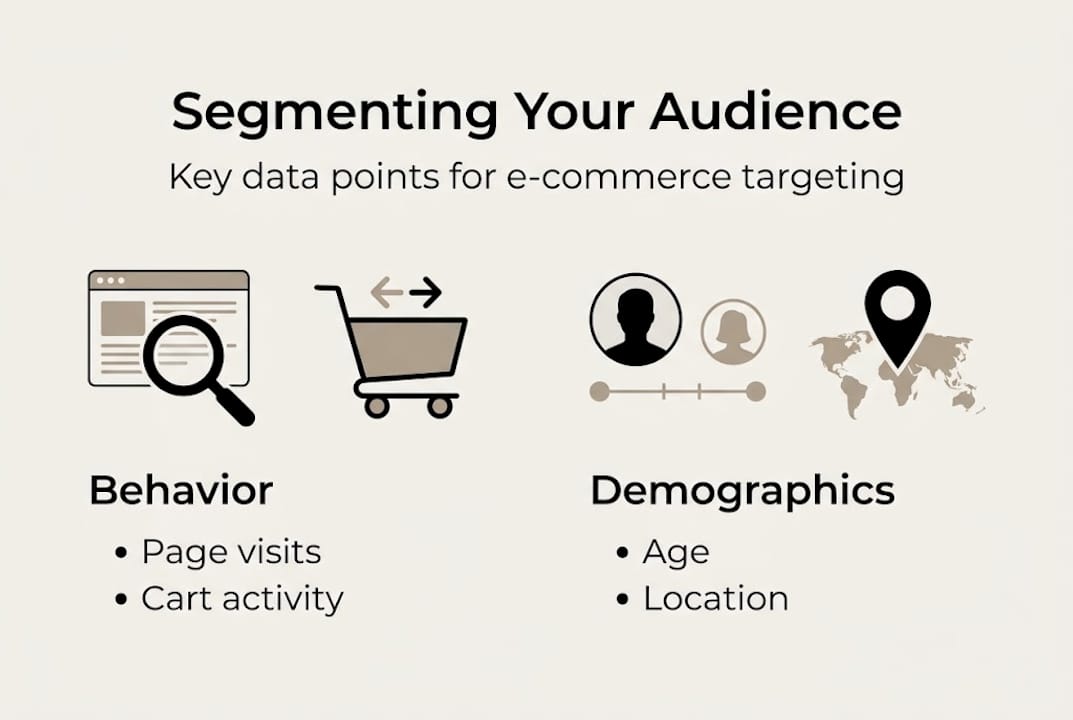
Tools like Klaviyo let you build dynamic segments that update in real time based on behavioral triggers, while Shopify provides built-in behavioral filters you can pipe directly into your email flows. Integrating zero-party and first-party data, meaning information customers voluntarily share through quizzes, surveys, or onboarding forms, improves targeting accuracy significantly. You can dig deeper into list segmentation best practices to see how these data layers work together in practice.
Balancing broad vs. targeted segments: What actually works?
Now that you know the key data, let’s look at how to use that information to find your segmenting sweet spot. This is where most DTC brands get stuck. Go too broad, and engagement suffers. Go too narrow, and you miss revenue. The answer is not picking one approach. It is knowing when to use each.
Here is a quick benchmark comparison to put this in perspective:
| Approach | Avg. open rate | Avg. CTR | Revenue impact |
|---|---|---|---|
| Broad send (full list) | 18-22% | 1.5-2.5% | High total volume, lower per-email |
| Targeted segment | 28-38% | 3.5-6.5% | Lower volume, higher per-email ROI |
| Hybrid (segmented broad) | 24-30% | 2.5-4.5% | Best balance for scaling brands |
According to DTC email benchmarks, brands should aim for email to account for at least 33% of total revenue, and segmentation can lift click-through rates by 15 to 35%. That is not a small improvement. That is the difference between a campaign that breaks even and one that meaningfully moves your monthly numbers.
But here is the nuance most guides skip. As covered in analysis on personalization strategy, broader sends can actually maximize total revenue even though engagement rates look weaker. Why? Because you are reaching more people. The key is ensuring your broad sends are still going to a clean, engaged portion of your list, not dead weight.
Pros of broad targeting:
- Higher total send volume means more potential conversions
- Simpler to manage and test quickly
- Works well for major promotions or seasonal campaigns
Cons of broad targeting:
- Lower engagement rates can hurt deliverability
- Messaging feels less personal, which reduces brand connection
- Risk of burning uninterested subscribers faster
Pros of tight segmentation:
- Stronger relevance leads to higher per-email ROI
- Protects sender reputation and inbox placement
- Supports segmentation benefits like reduced churn and increased loyalty
Cons of tight segmentation:
- Requires more setup and ongoing maintenance
- Can miss revenue from subscribers who fall between segments
- Over-segmenting creates complexity that slows execution
The practical answer for most brands is a hybrid approach. Use segmentation strategies for your automated flows and high-value campaigns, and reserve broader sends for moments when scale genuinely serves the goal, like a sitewide sale or product launch.
Advanced tactics for refining and maintaining your target audience
So how do you keep your segmentation process sharp and your campaigns driving continued results? Building segments is the starting point. Keeping them accurate and useful over time is the real work.
As 2026 email benchmarks show, brands that maintain clean lists consistently see 25 to 45% active engagement rates, while brands that ignore list hygiene see deliverability and revenue decline together. Over-segmentation creates unmanageable complexity. Under-segmentation causes low engagement. Neither extreme serves you.
Here are the advanced tactics that keep audience targeting effective:
- Quarterly list cleaning. Remove or suppress subscribers who have not opened or clicked in 90 to 180 days. Send a win-back sequence before removing them, and if they do not respond, let them go.
- AI-powered segmentation. Platforms like Klaviyo use machine learning to predict customer behavior, including likelihood to purchase and churn risk, letting you build dynamic segments that self-update without manual intervention.
- Zero-party data collection. Add quiz flows, preference centers, or onboarding surveys to let customers self-select into segments. This data is both accurate and consented, which makes it more reliable than inferred behavioral signals alone.
- Periodic audience reviews. Every quarter, audit your top segments. Are the rules still reflecting real customer behavior? Has your product line shifted in a way that makes old segments obsolete?
- Engagement tier modeling. Create tiers like highly engaged, moderately engaged, and at-risk based on recent activity. Send your most important campaigns to the top tier first and measure results before rolling out broadly.
Pro Tip: If you find yourself managing more than 10 active segments regularly, pause and consolidate. Complexity is the enemy of execution. Fewer, smarter segments almost always outperform a sprawling taxonomy that nobody can keep updated.
The brands that scale email revenue fastest are not the ones with the most segments. They are the ones with the most intentional ones.
Consider building your list with quality in mind from the start so your segmentation work pays off from day one rather than requiring heavy cleanup later.
A fresh perspective: Why intent trumps identity (and what most brands miss)
Here is something most playbooks will not tell you: the majority of DTC brands are segmenting on the wrong thing. They are sorting customers by who they are when they should be sorting them by what they are about to do.
Demographic segmentation is comfortable because the data is easy to collect and the logic feels intuitive. Of course you would market differently to a 25-year-old than a 45-year-old. But in practice, a 45-year-old who just spent 20 minutes on your site browsing a specific product category is a far better target than a 25-year-old who joined your list six months ago and has not clicked anything since.
Intent is what drives purchases. And intent lives in behavior, timing, and the signals customers send when they interact with your brand in real time. Prioritizing intent over demographics, using zero-party data from quizzes and popups, and building dynamic segments that update based on live behavior is where the real revenue gains hide.
We have seen brands cut their email frequency by 30% and increase revenue per send by over 40% simply by shifting from identity-based to intent-based segments. Fewer emails to more relevant people. That is the unlock. Understanding your digital media strategy as a whole helps reinforce why email targeting does not live in isolation. When your intent signals align across channels, everything gets sharper.
Boost your results with expert email audience strategies
Ready to put these segmentation strategies into action? Defining and maintaining your target audience is ongoing work, and doing it well requires both the right tools and the right expertise.
At Take Action, we help DTC brands move beyond generic sends and build segmentation systems that drive real, measurable revenue. From Klaviyo flow setup and dynamic segment creation to full campaign strategy, our team handles the complexity so you can focus on growth. If you are ready to make email your most profitable channel, explore our DTC email solutions or book a strategy call and we will show you exactly where your audience targeting can improve.
Frequently asked questions
What is the most important data for segmenting email audiences?
Intent data and recent behaviors outperform basic demographics when building effective segments. Dynamic segments that update based on real-time activity, combined with zero-party data from quizzes and preference centers, give you the sharpest targeting possible.
How often should I clean my email list to keep audiences relevant?
You should clean your list at least quarterly. Consistent hygiene helps you maintain 25 to 45% active engagement rates and protects your sender reputation over time.
Does sending to a broader audience hurt email performance?
It can lower open and click rates, but broader sends sometimes maximize total revenue when balanced carefully with solid list hygiene and smart segmentation on your core flows.
What tools help automate segmentation for DTC email lists?
Platforms like Klaviyo and Shopify offer dynamic, behavioral-based segmentation automation. Klaviyo updates segments in real time, while Shopify provides built-in behavioral filters you can activate immediately.