
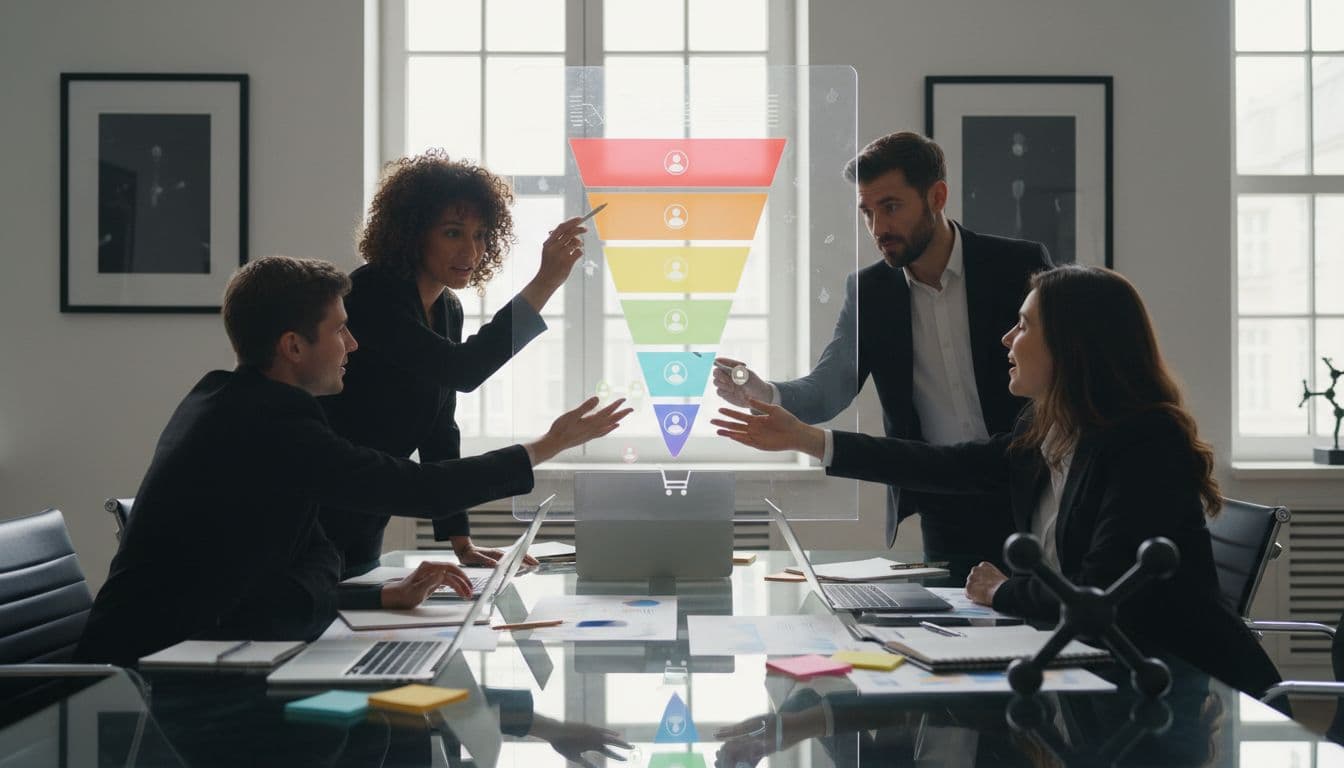
7 Key Sales Funnel Stages for Ecommerce Growth Success
Over 70 percent of american buyers say that their first impressions of a brand influence whether they continue with a purchase or not. In an age where attention is fleeting and competition is fierce, understanding each stage of the customer journey makes the difference between a one-time shopper and a loyal advocate. This guide breaks down what drives genuine connection and growth, giving you practical strategies to keep your brand top of mind through every step.
Table of Contents
- Understanding The Awareness Stage For New Leads
- Engaging Prospects In The Interest Stage Effectively
- Nurturing Connections During The Consideration Stage
- Converting Shoppers In The Decision Stage With Email
- Maximizing Revenue In The Purchase Stage
- Retaining Customers Through The Post-Purchase Stage
- Boosting Loyalty In The Advocacy And Repeat Stage
Quick Summary
| Takeaway | Explanation |
|---|---|
| 1. Create engaging content in the awareness stage | Focus on delivering high-quality, educational content to capture attention and establish trust with potential customers. |
| 2. Nurture leads with valuable insights in the interest stage | Share detailed information such as product comparisons and case studies to help prospects seriously consider your solution. |
| 3. Build credibility during the consideration stage | Use testimonials and interactive demos to demonstrate your product’s unique value, addressing customer concerns proactively. |
| 4. Use personalized email strategies for conversions | Develop targeted email campaigns to motivate potential customers and encourage them to complete their purchase. |
| 5. Focus on exceptional post-purchase experiences | Engage customers after the sale with personalized communications and support, fostering loyalty and encouraging repeat business. |
1. Understanding the Awareness Stage for New Leads
The awareness stage represents the critical first touchpoint where potential customers discover your brand and begin to recognize their own needs. According to Coursera, businesses aim to attract as many people as possible by creating content that generates genuine interest in their product or service.
At this initial phase, your primary goal is capturing attention and sparking curiosity about your brand. Think of the awareness stage as a digital first impression where you demonstrate value before making any direct sales pitch. Strategic content marketing becomes your most powerful tool for building initial trust and establishing thought leadership.
To effectively engage potential leads during the awareness stage, focus on creating high quality educational content that addresses customer pain points. This might include:
- Informative blog posts that solve specific problems
- Engaging social media content showcasing your expertise
- Compelling infographics explaining complex industry concepts
- Short video tutorials demonstrating your understanding of customer challenges
The key is providing authentic value without feeling overtly promotional. By positioning your brand as a knowledgeable resource, you transform anonymous website visitors into potential future customers who are genuinely interested in what you offer.
Successful awareness stage strategies require understanding your target audience deeply. Research their online behaviors, preferred content formats, and the specific questions they are asking. This allows you to craft targeted content that resonates directly with their interests and establishes an immediate connection.
Remember, the awareness stage is about building relationships. Your content should inform, entertain, and subtly showcase your unique perspective. By consistently delivering high quality insights, you transform casual browsers into engaged prospects who are eager to learn more about your brand.
2. Engaging Prospects in the Interest Stage Effectively
The interest stage represents a critical moment where potential customers transition from mere awareness to serious consideration of your product or solution. According to Cal Poly, it is crucial to nurture leads by offering valuable information and maintaining authentic engagement to build trust and guide them towards a purchase decision.
Strategic communication becomes paramount during this phase. Your goal shifts from generating initial attention to providing deeper insights that demonstrate your product’s unique value proposition. Prospects are actively evaluating options and seeking comprehensive information that will help them make an informed decision.
To effectively engage prospects in the interest stage, consider implementing these targeted strategies:
- Create detailed product comparison guides
- Develop in depth case studies showcasing real customer successes
- Produce educational webinars that address specific customer challenges
- Design interactive content that allows prospects to explore your offerings
- Craft personalized email sequences with valuable industry insights
Psychological engagement matters tremendously. Your content should not just inform but also resonate emotionally with potential customers. By understanding their specific pain points and demonstrating how your solution provides meaningful resolution, you transform passive interest into active consideration.
Nurturing leads requires a delicate balance between providing valuable information and avoiding overwhelming prospects with too much technical detail. Focus on clear, concise communication that highlights tangible benefits and addresses potential concerns proactively. Learn more about marketing psychology strategies to refine your approach to prospect engagement.
Remember that the interest stage is about building credibility and trust. Each interaction should reinforce why your solution stands out from competitors and how it can genuinely improve the prospect’s situation. By consistently delivering authentic value, you create a compelling narrative that naturally guides potential customers towards the next stage of their buying journey.
3. Nurturing Connections During the Consideration Stage
The consideration stage represents a pivotal moment where potential customers critically evaluate your solution against their specific needs and competitive alternatives. According to Code Design, this stage involves prospects conducting deeper research and comparisons to determine the best fit for their requirements.
Strategic content and personalized communication become essential during this phase. Your primary objective shifts from generating interest to providing comprehensive evidence that demonstrates why your solution stands out. Potential customers are now actively seeking detailed information that helps them make an informed purchasing decision.
To effectively nurture connections during the consideration stage, implement these targeted strategies:
- Create side by side product comparison guides
- Develop in depth case studies highlighting specific customer success stories
- Produce video testimonials from customers in similar industries
- Design interactive product demos that showcase unique features
- Craft targeted email sequences addressing common customer questions
Psychological engagement remains critical. Your approach should balance providing technical details with emotional reassurance. By anticipating and proactively addressing potential customer concerns, you transform passive evaluation into active interest.
Successful consideration stage strategies require deep understanding of your target audience’s decision making process. Explore our guide on marketing psychology to refine your approach to prospect communication and build more compelling narratives.
Remember that trust is the fundamental currency during this stage. Each piece of content should transparently demonstrate your solution’s value, credibility, and alignment with the customer’s specific challenges. By consistently delivering authentic, comprehensive information, you guide potential customers closer to making a confident purchasing decision.
4. Converting Shoppers in the Decision Stage With Email
The decision stage represents the critical moment where potential customers determine whether to complete their purchase. According to Business Initiative, personalized email marketing strategies are crucial to encourage prospects to make a final purchasing decision.
Strategic email communication becomes paramount during this transformative phase. Your goal shifts from generating interest to providing the precise motivation needed to transform consideration into action. Targeted email campaigns can effectively bridge the gap between potential customer hesitation and confident purchase commitment.
To maximize conversion potential through email marketing, implement these targeted strategies:
- Design time sensitive promotional offers
- Create urgency with limited availability messaging
- Develop personalized product recommendation emails
- Include social proof through customer testimonials
- Craft compelling abandoned cart recovery sequences
Psychological triggers play a significant role in decision stage conversions. Your email content should address potential customer concerns while highlighting the unique value proposition of your product. By combining emotional resonance with rational persuasion, you can effectively guide prospects towards making a purchase.
Learn advanced email marketing techniques to refine your approach and create more compelling conversion strategies. The most successful emails provide clear value, address potential objections proactively, and make the purchasing process feel straightforward and risk free.
Remember that trust is the ultimate currency in the decision stage. Each email should reinforce why your solution is the best choice by demonstrating understanding of the customer’s specific needs and offering a seamless path to resolution. Authentic communication combined with strategic psychological insights can transform hesitant prospects into confident customers.
5. Maximizing Revenue in the Purchase Stage
The purchase stage represents the critical moment where potential customers transform into actual buyers. According to Rivier University, this stage focuses on finalizing the sale by ensuring customers are confident in their decision and providing a seamless transaction process.
Strategic transaction optimization becomes paramount in converting interest into actual revenue. Your primary objective shifts from persuasion to creating an effortless purchasing experience that minimizes friction and maximizes customer confidence. Every interaction during this stage can potentially impact your conversion rates and overall sales performance.
To maximize revenue and create a smooth purchasing experience, implement these strategic approaches:
- Streamline checkout processes with minimal steps
- Offer multiple secure payment options
- Provide transparent pricing with no hidden fees
- Display trust signals like security badges
- Include real time customer support during purchase
Psychological comfort plays a significant role in purchase completion. Your goal is to eliminate any last minute hesitations by creating an environment that feels secure, straightforward, and trustworthy. This means anticipating potential customer concerns and proactively addressing them throughout the transaction process.
Learn advanced email marketing techniques to support and enhance your purchase stage strategies. The most successful ecommerce experiences make customers feel supported and confident at every step of their buying journey.
Remember that the purchase stage is about more than just completing a transaction. It is an opportunity to create a positive first impression that can lead to future loyalty, repeat purchases, and potential word of mouth recommendations. By focusing on customer experience and removing potential barriers, you transform a simple sale into the beginning of a long term customer relationship.
6. Retaining Customers Through the Post-Purchase Stage
The post-purchase stage represents a critical opportunity to transform a single transaction into a long term customer relationship. According to Cal Poly, maintaining engagement through follow-up communications and providing additional value helps in retaining customers and building lasting loyalty.
Strategic customer retention becomes the primary focus during this stage. Your goal shifts from completing a sale to creating an exceptional experience that encourages repeat business and positive word of mouth recommendations. Every interaction after the purchase is an opportunity to reinforce the customer’s decision and build ongoing trust.
To effectively retain customers and maximize post-purchase engagement, implement these strategic approaches:
- Send personalized thank you emails
- Provide exclusive post purchase content or tutorials
- Offer targeted product recommendations
- Create a seamless customer support experience
- Design loyalty program incentives for future purchases
Psychological connection plays a significant role in customer retention. Your post purchase communication should make customers feel valued, understood, and excited about their purchase. This means going beyond transactional interactions and creating meaningful connections that demonstrate your commitment to their satisfaction.
Explore our guide to building customer loyalty online to develop more sophisticated retention strategies. The most successful brands understand that the post purchase stage is not an endpoint but the beginning of a potentially lifelong customer relationship.
Remember that customer retention is more cost effective than acquisition. By focusing on creating exceptional post purchase experiences, you transform one time buyers into brand advocates who are likely to make repeat purchases and recommend your brand to others. Authentic communication, unexpected value, and genuine care can turn a single transaction into a lasting customer connection.
7. Boosting Loyalty in the Advocacy and Repeat Stage
The advocacy and repeat stage represents the pinnacle of customer relationship success where satisfied customers transform into passionate brand ambassadors. According to Cal Poly, leveraging satisfied customers to promote your brand through word of mouth and referrals can significantly boost loyalty and organic growth.
Strategic brand advocacy becomes the ultimate goal during this final stage of the customer journey. Your objective shifts from retention to creating such an exceptional experience that customers voluntarily become your most powerful marketing channel. This means going beyond transactional relationships and building genuine emotional connections that inspire customers to share their positive experiences.
To effectively cultivate brand advocates and encourage repeat business, implement these strategic approaches:
- Design comprehensive referral programs with meaningful rewards
- Create exclusive community experiences for loyal customers
- Develop personalized loyalty tiers with escalating benefits
- Showcase customer success stories and testimonials
- Provide insider access to new products or early releases
Psychological investment plays a crucial role in transforming customers into advocates. Your approach should make customers feel uniquely valued and part of something larger than a simple purchasing transaction. This means creating experiences that go beyond traditional customer service and tap into deeper emotional connections.
Learn how to master branding for building customer loyalty and develop more sophisticated advocacy strategies. The most successful brands understand that true loyalty is earned through consistent exceptional experiences and genuine appreciation.
Remember that brand advocates are your most valuable marketing asset. By focusing on creating remarkable experiences that consistently exceed expectations, you can turn satisfied customers into passionate promoters who actively recommend your brand. Authentic engagement, unexpected value, and a genuine commitment to customer success can transform your business from a transactional entity to a beloved community.
Below is a comprehensive table summarizing the stages and strategies for engaging leads throughout the marketing funnel discussed in the article.
| Stage | Goals & Strategies | Expected Outcomes |
|---|---|---|
| Awareness | Capture attention with educational content: blog posts, social media, infographics | Build initial trust and transform visitors into prospects |
| Interest | Nurture with detailed guides, case studies, and webinars | Move prospects towards serious consideration |
| Consideration | Provide comparisons, testimonials, and demos | Help prospects make informed purchasing decisions |
| Decision | Use email to encourage purchase: offers, urgency, recommendations | Convert consideration into completed sales |
| Purchase | Optimize checkout processes and support | Minimize friction and maximize confidence |
| Post-Purchase | Retain through follow-ups and loyalty programs | Encourage repeat business and positive word of mouth |
| Advocacy and Repeat | Turn customers into advocates with referral programs, exclusives | Boost loyalty and organic growth through brand ambassadors |
Unlock Ecommerce Growth by Mastering Your Sales Funnel with Expert Email Strategies
Navigating the 7 key sales funnel stages for ecommerce success can feel overwhelming. You might be struggling to convert awareness into loyalty while dealing with abandoned carts and dwindling engagement. This article highlights crucial challenges like capturing attention, nurturing interest, and making the purchase experience seamless. Your goal is to increase revenue without losing prospects at any funnel phase.
Take Action specializes in transforming these pain points into growth opportunities by leveraging advanced email marketing automation and strategic campaigns using Klaviyo. We help brands automate customer retention, boost open and click rates, and recover abandoned carts to diversify revenue beyond paid ads. Our approach combines deep human insight with AI-driven data for measurable, scalable results.
Discover how our tailored services like welcome flows, post-purchase sequences, and targeted automations can make your sales funnel more effective and profitable.
Elevate your ecommerce brand today with proven email strategies designed to guide your customers confidently through every stage of their journey.
Ready for lasting growth through optimized email marketing?
Explore how Take Action can help you master the sales funnel stages with expert email marketing. Visit Take Action now to start turning prospects into loyal customers and multiply your revenue streams. Don’t wait to unlock your brand’s full potential.
Frequently Asked Questions
What are the key stages of the sales funnel for ecommerce?
The key stages of the sales funnel for ecommerce include the Awareness, Interest, Consideration, Decision, Purchase, Post-Purchase, and Advocacy stages. Each stage plays a crucial role in guiding potential customers through their buying journey.
How can I create effective content for the awareness stage?
To create effective content for the awareness stage, focus on producing high-quality, educational materials that address your target audience’s pain points. This could be in the form of blog posts, infographics, or videos that provide real value and showcase your expertise.
What strategies should I use during the consideration stage to nurture leads?
During the consideration stage, implement strategies such as detailed product comparisons, in-depth case studies, and customer testimonials. These types of content help potential customers evaluate your offerings against their needs and build trust in your brand.
How can email marketing boost conversions in the decision stage?
Email marketing can boost conversions in the decision stage by sending personalized messages that create urgency, such as limited-time offers and abandoned cart reminders. Aim to include customer testimonials and clear calls to action to motivate prospects to finalize their purchase.
What steps can I take to enhance post-purchase engagement?
To enhance post-purchase engagement, send personalized thank-you emails, offer exclusive content, and create loyalty programs for repeat customers. These actions can significantly improve customer satisfaction and encourage them to return for future purchases.
How do I turn satisfied customers into brand advocates?
To turn satisfied customers into brand advocates, establish referral programs that reward them for recommending your brand. Focus on creating exceptional experiences that make them feel valued and part of a community, increasing the likelihood they’ll share their positive experiences with others.
Recommended
- 7 Must-Read Business Book Recommendations for Ecommerce Growth | Take Action Blog | Take Action
- 7 Essential Ecommerce Marketing Strategies for Growth | Take Action Blog | Take Action
- Marketing Automation Checklist for Ecommerce Growth Success | Take Action Blog | Take Action
- 7 Steps Ecommerce Marketing Checklist for Brand Growth Success | Take Action Blog | Take Action
- List Growth Strategieën: Complete Gids Voor Webshops - BrickMail
- 9 stappen om een webshop contentstrategie te creëren die verkoopt - BrickMail