

What Is a Klaviyo List? E-Commerce Guide 2026
TL;DR:
- A Klaviyo list is a static group of explicitly opted-in contacts that grows through direct actions like form submissions or imports. It provides a stable foundation for consent management, campaign consistency, and automation triggers, unlike dynamic segments that update automatically. Proper list management, including hygiene and compliance, is essential for maintaining deliverability and scaling effective email marketing strategies.
A Klaviyo list is a static collection of profiles representing subscribers who have explicitly opted in to receive marketing communications via email or SMS. Unlike dynamic segments that update automatically based on behavior, a list only grows when someone actively subscribes, gets imported, or is added through the API. For e-commerce marketers, this distinction is not a minor technical detail. It determines how you manage consent, protect your sender reputation, and build campaigns that actually reach the right people.

What is a klaviyo list and how does it work?
A Klaviyo list is the foundational audience structure inside the Klaviyo platform. Every contact on your list is there because they took a deliberate action: filling out a signup form, being imported from a CSV file, or being added programmatically through Klaviyo’s API. That explicit opt-in is what separates a list from every other audience type in the system.
The static nature of a list is its defining characteristic. Contacts stay on a list until they unsubscribe, are manually removed, or are deleted. Nothing about their purchase behavior, browsing activity, or engagement level changes their list membership automatically. This makes lists the most stable audience structure in Klaviyo, and stability has real value when you need a consistent, permission-verified pool of contacts to send to.
A Klaviyo list also serves as the entry point for flows. When someone subscribes to your newsletter list, that action can trigger a welcome series. When a customer is added to a post-purchase list, that triggers a retention sequence. The list is not just a storage container. It is an active trigger mechanism that powers your automation.
Pro Tip: Create a dedicated list for each marketing channel you run, such as one for email and one for SMS. This keeps consent records clean and makes compliance with regulations like CAN-SPAM and GDPR far easier to manage.
How do klaviyo lists differ from segments and profiles?
Understanding the relationship between lists, segments, and profiles is the most important conceptual step for any e-commerce marketer new to Klaviyo. Confusing them leads to targeting errors, compliance problems, and wasted sends.
What a klaviyo profile actually is
A Klaviyo profile is the unique record for a single person in your Klaviyo database. It stores everything Klaviyo knows about that person: their email address, purchase history, location, engagement data, and any custom properties you track. One profile can belong to multiple lists simultaneously without any duplication. This is a critical point. Adding someone to a second list does not create a second profile. It simply associates their existing record with an additional list.
Lists vs. segments: the core difference
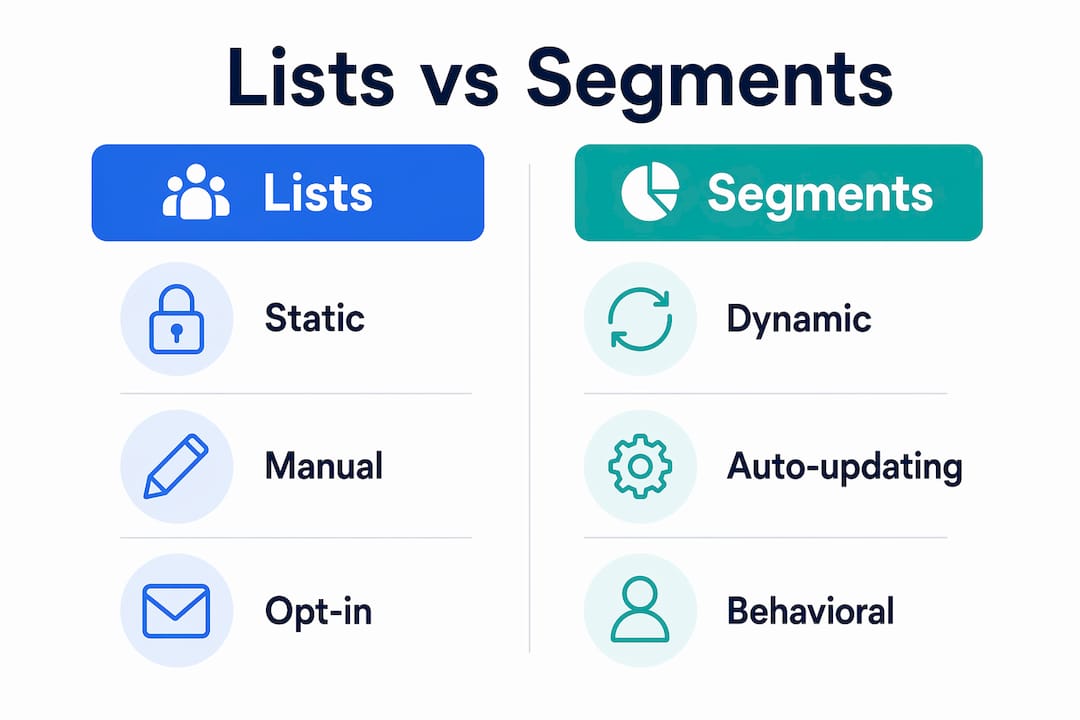
Lists are static; segments are dynamic. A segment is a filtered view of your database that updates in real time based on conditions you define. A segment of “customers who purchased in the last 30 days” will look completely different next week than it does today. A list of those same customers, if you had imported them manually, would remain unchanged.
Here is a direct comparison to make this concrete:
| Feature | Klaviyo List | Klaviyo Segment |
|---|---|---|
| Membership type | Static, manually managed | Dynamic, auto-updated |
| Entry method | Opt-in, import, or API | Behavioral or property conditions |
| Consent tracking | Yes, tied to list subscription | No direct consent record |
| Best use case | Campaign sends, flow triggers | Targeting filters, analytics |
| Compliance role | Primary consent record | Secondary targeting layer |
The practical implication is significant. Segments must be confined to your master list when used in campaign targeting. If you send a campaign to a segment without filtering for list membership, you risk messaging contacts who never explicitly opted in. That is a deliverability and legal problem.
Pro Tip: When building a segment for a campaign, always add a filter for “is in list: [your master email list].” This one step protects your sender reputation and keeps you compliant.
What are the advantages and limitations of klaviyo lists?
Lists give e-commerce marketers something segments cannot: a stable, consent-verified audience. That stability has specific advantages worth understanding before you build your list architecture.
Where lists excel
- Consent management. A list subscription is a documented opt-in event. Klaviyo records when someone subscribed, through which form, and via which source. This paper trail is your legal defense under CAN-SPAM and GDPR.
- Campaign consistency. Because the audience does not change mid-send, lists are the right structure for broadcast campaigns like newsletters, product launches, and seasonal promotions.
- A/B testing reliability. Static lists make campaign testing more valid because the audience does not shift during the test window. A segment-based test audience could change size and composition between the send and the result read, skewing your data.
- Flow triggers. Klaviyo flows are triggered by list subscriptions. You cannot trigger a flow from segment membership alone.
- Deliverability protection. Sending only to opted-in list members keeps your complaint rates low and your domain reputation intact.
Where lists fall short
Lists are not built for precision targeting on their own. A list of 50,000 subscribers tells you nothing about who bought recently, who is at risk of churning, or who clicked your last three emails. For that level of targeting, you need segments layered on top of your list. The list provides the permission boundary. The segment provides the filter.
Lists also require active maintenance. Unlike segments that self-update, a list will hold onto unengaged contacts indefinitely unless you build a suppression or cleaning process. Unengaged contacts hurt your open rates and, over time, your deliverability. Combining list hygiene with segmentation is the only way to keep both metrics healthy.
How do e-commerce brands effectively manage klaviyo lists?
Good list management is not complicated, but it requires discipline. Most deliverability problems and compliance risks come from avoidable structural mistakes made early in a brand’s Klaviyo setup.
Follow these steps to build a list architecture that scales:
- Start with one master list per channel. Maintaining a single master list per channel, one for email and one for SMS, is the most effective way to centralize consent records and avoid data overlap. Every opted-in contact lives here.
- Use signup forms to grow the list organically. Klaviyo’s native signup forms, embedded forms, and pop-ups all connect directly to your list. Each submission is a documented opt-in event with a timestamp and source.
- Import contacts carefully. When importing a CSV, only include contacts who have given explicit permission to receive marketing from your brand. Importing purchased lists or trade show contacts without clear consent is a compliance violation and a deliverability risk.
- Suppress unengaged contacts regularly. Build a segment of contacts who have not opened or clicked in 90–180 days. Suppress them from campaigns or run a re-engagement flow before removing them. This keeps your active list healthy and your metrics accurate.
- Document your consent sources. Klaviyo lets you add source tags to list subscriptions. Use them. Knowing whether a contact came from a checkout opt-in, a pop-up, or a manual import matters when a compliance question arises.
- Audit your list structure quarterly. If you have accumulated multiple lists for similar audiences, consolidate them. Fragmented lists create consent confusion and make it harder to track your true active subscriber count.
Brands that follow this structure consistently see stronger email deliverability and retention over time because their list reflects only people who genuinely want to hear from them.
What are the most common mistakes marketers make with klaviyo lists?
Most Klaviyo list problems fall into a small number of repeatable patterns. Recognizing them early saves significant cleanup work later.
- Treating lists and segments as interchangeable. Lists and segments serve different functions. A list is a consent record and a trigger mechanism. A segment is a targeting filter. Using a segment as your primary send audience without a list membership filter is one of the most common compliance mistakes in Klaviyo.
- Creating multiple lists for similar audiences. Brands often create separate lists for “newsletter subscribers,” “VIP customers,” and “sale shoppers.” This fragments consent records, complicates unsubscribe management, and inflates your apparent list size without adding real value. Segments handle the differentiation. The list handles the permission.
- Importing contacts without verified consent. Any contact added to a Klaviyo list without a clear opt-in record is a liability. Even if the contact is a past customer, importing them without a marketing consent record violates CAN-SPAM and GDPR in most contexts. Review your anti-spam practices before any large import.
- Ignoring list decay. A list that is never cleaned will accumulate unengaged contacts over time. Those contacts drag down your open rates, increase your spam complaint rate, and signal to inbox providers that your sending practices are poor. Suppression is not optional. It is a core part of list maintenance.
- Sending campaigns to unfiltered segments. This is the operational version of the first mistake. Always confirm that any segment used for a campaign send includes a filter for membership in your master email list. This single rule prevents the majority of compliance and deliverability incidents.
Key takeaways
A Klaviyo list is the permission foundation of your entire email program. Every other targeting and automation decision in Klaviyo depends on getting your list structure right first.
| Point | Details |
|---|---|
| Lists are static by design | Contacts join through opt-in, import, or API and stay until removed or unsubscribed. |
| One master list per channel | Centralizing opted-in contacts simplifies consent records and protects deliverability. |
| Lists and segments work together | Lists provide the permission boundary; segments provide the targeting precision. |
| Always filter segments by list | Including a list membership filter in campaign segments prevents non-opted-in sends. |
| List hygiene is non-negotiable | Suppressing unengaged contacts regularly protects your sender reputation and open rates. |
Why most brands get their klaviyo list strategy backwards
After working with dozens of e-commerce brands on their Klaviyo setups, I have noticed a consistent pattern. Most brands invest heavily in building segments and flows before they have a clean, well-structured list underneath it all. The result is sophisticated automation built on a shaky foundation.
The brands that see the best long-term email performance treat their master list like a legal document, not just a marketing tool. Every contact on it has a documented reason for being there. Every import is audited. Every unsubscribe is processed immediately. That discipline is not glamorous, but it is what keeps your domain reputation intact after two or three years of sending.
The other thing I consistently see underused is the combination of a single master list with tightly built segments layered on top. Brands either over-segment their lists into a fragmented mess of 15 different lists, or they send every campaign to their entire list with no targeting at all. The right approach sits in the middle. One clean list. Many precise segments. That structure gives you the compliance protection of a list and the targeting power of behavioral data at the same time.
If you are building your Klaviyo setup from scratch, start with the list architecture before you touch a single flow or campaign. Get the segmentation strategy right at the foundation level, and everything else becomes easier to build and easier to scale.
— Take
How Take-action helps brands build klaviyo list strategies that drive revenue
Take-action specializes in building Klaviyo email programs for e-commerce brands that need more than a basic setup. That includes structuring master lists correctly from day one, building suppression flows that protect deliverability, and layering segments that drive real targeting precision without creating compliance risk. If your current list architecture is fragmented, your open rates are declining, or you are not sure whether your consent records would hold up to scrutiny, Take-action can audit your setup and build a structure that scales. Visit Take-action’s email marketing services to see how a properly managed Klaviyo list strategy translates directly into higher engagement and recovered revenue.
FAQ
What is a klaviyo list in simple terms?
A Klaviyo list is a static group of contacts who have explicitly opted in to receive marketing emails or SMS messages from your brand. It grows only through manual actions like form submissions, imports, or API additions.
How is a klaviyo list different from a klaviyo segment?
A list is static and manually managed, while a segment updates automatically based on behavioral conditions like recent purchases or email engagement. Lists track consent; segments track behavior.
Can one profile belong to multiple klaviyo lists?
Yes. A single Klaviyo profile can belong to multiple lists without creating duplicate records. Klaviyo maintains one profile per person and associates it with whichever lists that person has joined.
How many klaviyo lists should an e-commerce brand have?
Most brands need one master list per marketing channel, typically one for email and one for SMS. Additional lists should only be created for distinct consent contexts, such as a separate wholesale or B2B program.
Why does list hygiene affect email deliverability?
Unengaged contacts on your list increase your spam complaint rate and lower your open rate. Inbox providers like Gmail and Outlook use these signals to decide whether your emails reach the inbox or the spam folder.