

UGC Strategy for Ecommerce Brands: 2026 Guide
TL;DR:
- A well-executed UGC strategy significantly boosts ecommerce conversion rates by leveraging authentic customer content. Most brands neglect the importance of structured sourcing, rights management, and continuous testing, leading to underperformance. Building a diversified, rights-cleared, and refreshable UGC pipeline across channels sustains growth and enhances brand trust.
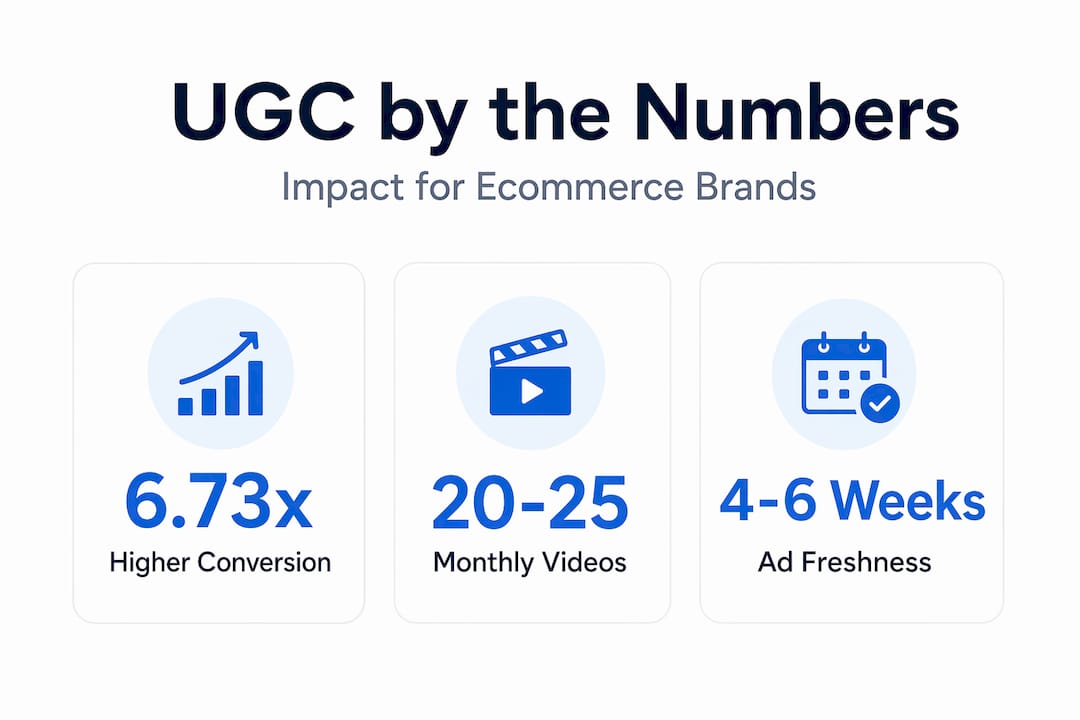
A well-built ugc strategy is one of the most underused growth levers in ecommerce. Conversion rates are 6.73x higher on pages that feature user-generated content compared to those that don’t, yet most marketing managers treat UGC as a nice-to-have rather than a primary driver of performance. This guide covers exactly what you need to build a scalable, legally sound, and high-converting UGC marketing plan, from sourcing content and writing creator briefs to testing ads and expanding across email and retention channels.
Table of Contents
- Key takeaways
- Why UGC fundamentals matter for ecommerce
- Building a solid UGC marketing strategy
- Navigating UGC usage rights
- Testing and optimizing UGC ads
- Scaling UGC across channels
- My honest take on what actually works
- Ready to put your UGC strategy to work?
- FAQ
Key takeaways
| Point | Details |
|---|---|
| UGC converts far better | Pages with user-generated content show 6.73x higher conversion rates than non-UGC pages in 2026. |
| Strategy before sourcing | Set clear goals and brand guidelines before collecting creator content to avoid wasted effort. |
| Rights management matters | Always get documented, explicit permissions before using any creator content commercially. |
| Test hooks relentlessly | Allocate 40% of ad creative budget to hook testing and kill any creative below a 25% hook rate. |
| UGC belongs in email too | Embedding UGC into email flows and retention campaigns compounds the conversion impact across channels. |
Why UGC fundamentals matter for ecommerce
User-generated content is any content created by real customers or independent creators that relates to your brand. That covers photo reviews on product pages, unboxing videos posted on TikTok, written testimonials submitted after purchase, and social posts tagging your products in real-life settings.
What makes UGC perform is psychology, not aesthetics. It feels like a friend’s recommendation, and that trust signal is something a polished studio ad simply cannot replicate. Branded content signals effort. UGC signals experience. Shoppers in prospecting mode respond to the latter far more strongly.
The performance data backs this up:
- UGC-style ads on Meta and TikTok achieve 4x higher CTR and 50% lower CPC compared to polished branded content.
- Video reviews specifically lift conversions by up to 118%.
- Website visits are 4.11x higher on UGC pages compared to non-UGC pages in Q1 2026.
For ecommerce marketing managers, the priority should be video testimonials and unboxing content first, photo reviews second, and written testimonials third. Video carries the highest emotional weight and gives the platform algorithms the most to work with in terms of watch time and engagement signals. That said, don’t overlook the quiet power of a detailed written review on a product page. It answers pre-purchase objections in the voice of someone who already took the risk.
Pro Tip: Treat your product reviews section as a UGC asset, not just social proof. Featuring the most specific and detailed reviews in your email campaigns, ads, and PDPs creates a consistent trust layer across the entire customer journey.
Building a solid UGC marketing strategy
Most brands collect UGC opportunistically. They repost a tagged photo here, screenshot a tweet there. That is not a ugc marketing strategy. It is a content scavenging habit. A real plan has intentional goals, defined sourcing channels, and documented processes.

Start with goals. Are you using UGC primarily for brand awareness, for direct-response ads, or for post-purchase retention? Each goal changes the type of content you need, the creators you recruit, and the channels you prioritize. A brand in growth mode needs prospecting-ready video ads. A brand focused on retention needs social proof embedded into post-purchase email flows.
Once your goals are clear, build your sourcing engine:
- Organic community sourcing. Ask customers for content at the right moment, typically 7 to 14 days after delivery when satisfaction is high and the product is fresh in their hands.
- Branded hashtag campaigns. Create a campaign-specific hashtag and actively promote it across your packaging, email, and social. UGC campaign ideas for ecommerce that tie the hashtag to a real reason (a seasonal theme, a challenge, a giveaway) generate significantly more submissions.
- Paid creator partnerships. Work with micro-creators who have genuine product affinity. They produce authentic content at scale without the high cost of traditional influencer deals.
- UGC platforms. Platforms connecting brands to vetted content creators let you brief, receive, and license content in a single workflow.
The creative brief is the part most brands underinvest in. A detailed brief that specifies product positioning, hook directions, and usage rights is the difference between content that converts and content that fills a folder. Tell creators exactly what pain point to address, what tone to hit, and what the video must include in the first three seconds.
Pro Tip: Send your top-performing ad copy and a list of your most common customer objections to every creator before they film. The best UGC scripts come from real purchase psychology, not marketing language.
Navigating UGC usage rights
This is the section most ugc marketing plan guides skip. That is a serious mistake. Using a creator’s content without proper rights is not just an ethical problem. It exposes your brand to copyright infringement claims, platform takedowns, and reputational damage.
Here is what you need to get right:
- Licensing vs. ownership transfer. Legal experts recommend licensing over full ownership transfer. Licensing lets you define exactly where, how long, and on which platforms you can use the content, without stripping the creator of their rights entirely. This builds better long-term relationships.
- Document everything in writing. Explicit written permission is required before any commercial use. A comment saying “sure, go ahead” is not sufficient. You need a signed agreement or a documented digital confirmation that specifies the content, the intended use, the duration, and the territory.
- Centralize your permissions. Storing permissions in a centralized, searchable system protects you if a creator disputes usage down the line. Keeping records in a shared drive or rights management tool means you can pull documentation instantly.
- Set clear usage windows. Most licensing agreements run for 6 to 12 months for digital ads. After that window closes, you either renew or retire the content. Running expired licensed content is one of the most common and easily avoided legal risks in UGC programs.
Pro Tip: Include usage rights terms directly in your creator brief, not in a separate document sent afterward. When creators accept the brief, they are already acknowledging the terms. It removes friction and clarifies expectations before a single frame is shot.
Testing and optimizing UGC ads
Running UGC ads without a testing structure is how budgets disappear. The framework that consistently produces results follows three stages: hook testing, message testing, and scale.
- Hook testing. The first three seconds determine whether someone watches or scrolls. Allocate 40% of your Meta ad creative budget to testing hooks and kill any creative that falls below a 25% hook rate. Test 5 to 7 hook variations per concept before making any scaling decisions.
- Message testing. Once you have hooks that hold attention, test different core messages. One video might focus on a pain point, another on a transformation, another on social proof. The message that resonates with your audience becomes your scaling creative.
- Scale with discipline. Scaling UGC ads requires careful budget increases, typically no more than 20% every 48 hours, to avoid algorithm disruption. Do not double your budget on a winning ad overnight and expect consistent results.
The best-performing brands run 20 to 25 video creatives and 10 to 12 static creatives monthly as part of their structured testing cycle. That volume sounds high but it is what prevents ad fatigue from killing your ROAS.
| Platform | Best UGC format | Refresh cadence | Key metric to watch |
|---|---|---|---|
| Meta | Vertical video testimonials | Every 4 to 6 weeks | Hook rate and CPC |
| TikTok | Native-style unboxing and demos | Every 2 to 3 weeks | Watch-through rate |
| Static review images and snippets | Quarterly rotation | Click-to-open rate | |
| Product pages | Photo and video reviews | Ongoing as collected | Conversion rate lift |
Ad fatigue with UGC creatives sets in within 4 to 6 weeks. If you are not refreshing creative on a structured schedule, your performance decline is not a targeting problem. It is a creative problem.
Scaling UGC across channels
A mature ugc marketing strategy does not live only in your paid ad account. The brands extracting the most value from UGC are integrating it into email marketing, social, and retention campaigns to create a consistent layer of authenticity throughout the customer experience.
Here is how smart ecommerce teams use UGC across channels:
- Email flows. Embed photo reviews and video snippets into your abandoned cart, post-purchase, and winback sequences. A customer who almost bought but didn’t is far more likely to convert when they see another real customer’s experience than when they see a discount banner.
- Social proof on PDPs. Surface your best UGC directly on product detail pages. Shoppable photo galleries from real customers reduce the perceived risk of purchase for new visitors.
- Paid social retargeting. While UGC outperforms branded content in prospecting, polished content tends to work better in retargeting. Use both strategically and let your test data guide the split.
- Organic social scheduling. Repurpose top-performing UGC ads as organic posts. Content that converts paid traffic almost always builds organic engagement too.
One common mistake when scaling is treating UGC as a single content format. Brands that only collect one type of content from one demographic with one visual style exhaust their creative pool quickly. Diversity in creator style, age, aesthetic, and message is what keeps a UGC program scaling without decline.
UGC also generates product insight data that most brands ignore. When dozens of creators talk about the same benefit or ask the same question, that is direct feedback on your messaging gaps. Feed that back into your product copy, your email campaigns, and your ad scripts. The ecommerce brands building authentic content equity are the ones treating UGC as a research tool, not just a content source.
My honest take on what actually works
I’ve worked with enough ecommerce brands to know that the biggest UGC mistake is treating it as a campaign asset rather than a permanent growth system. Marketers run a UGC push, collect a batch of content, spend it down in two months, and then wonder why their ad performance drops. That is not a ugc strategy. That is a content sprint.
What actually works is building a continuous creator pipeline so you always have fresh material entering your testing queue. I’ve seen brands completely transform their Meta account health by committing to 15 to 20 new UGC pieces per month rather than running the same five creatives into the ground.
I’m also convinced that legal rights management is where most brands are operating on borrowed time. Reposting a customer photo without documented permission because they tagged you feels harmless until it isn’t. A single dispute from a creator who later changes their mind can pull weeks of ad creative offline.
My recommendation: combine a dedicated UGC budget with a clear rights documentation process from day one. Start with a small creator roster, test obsessively, and only scale the formats that earn it. UGC works best when it is specific, diverse, and constantly refreshed. Generic testimonials from a single demographic will not move your metrics.
— Take
Ready to put your UGC strategy to work?
Building a high-performing UGC program takes more than collecting creator content. It requires a connected system where your ad creative, email flows, and retention campaigns all reinforce each other with authentic social proof at every stage of the customer journey.
At Take-action, we help ecommerce brands build exactly that. Our team specializes in integrating UGC into email marketing and retention campaigns that convert, including welcome sequences, abandoned cart flows, and post-purchase automations built in Klaviyo. We combine creative strategy with data-driven testing to make sure your best UGC is working across every channel, not just your ad account. If you are ready to turn UGC into a measurable revenue driver, explore our services and see how we build growth systems for ecommerce brands like yours.
FAQ
What is a UGC strategy?
A ugc strategy is a planned approach to sourcing, licensing, testing, and deploying user-generated content across paid ads, email, and social channels to build brand authenticity and drive conversions.
How does UGC improve conversion rates?
Pages and ads featuring UGC convert at 6.73x higher rates than non-UGC content because real customer content builds trust and reduces purchase hesitation more effectively than branded messaging.
How often should I refresh UGC ad creatives?
Ad fatigue typically sets in within 4 to 6 weeks for UGC creatives on Meta. Refreshing your creative pool on a structured monthly schedule prevents performance drops from exhausted audiences.
Do I need legal permission to use customer photos in ads?
Yes. You need explicit written permission before using any customer or creator content commercially. A tagged post or public mention does not constitute consent for paid advertising use.
What types of UGC perform best for ecommerce ads?
Video testimonials and unboxing content consistently deliver the strongest results, with video reviews boosting conversions by up to 118% on platforms like Meta and TikTok.