

Personal Branding for Coaches: Your 2026 Growth Guide
TL;DR:
- Personal branding for coaches involves clearly communicating your unique perspective, values, and expertise to attract ideal clients.
- Success requires consistency on one platform, building a strategic body of work, and sharing authentic storytelling.
Personal branding for coaches is the strategic practice of communicating your authentic perspective, values, and expertise so that ideal clients choose you over every other option in your niche. The International Coaching Federation recognizes that a personal brand functions as a professional asset that works even when you are offline. Leonie Novorol, a business coach known for sustainable branding approaches, argues that effective coaching brand development does not require hustle or oversharing. It requires clarity, consistency, and a calm presence that communicates value at every touchpoint. This guide covers the core pillars, AI tools, content strategy, networking, and the most common mistakes coaches make when building their brand.
What are the core elements of personal branding for coaches?
Personal branding for coaches rests on five pillars: a distinct point of view, consistent visibility, a body of work, communicated values, and authentic storytelling. Miss one and your brand becomes forgettable. Nail all five and clients start finding you rather than the other way around.
A clear, potentially divisive point of view
The biggest mistake coaches make is trying to appeal to everyone. Being agreeable makes you forgettable. A specific, even polarizing perspective risks losing some prospects but makes you instantly recognizable to the right ones. A leadership coach who publicly argues that most executive coaching programs produce zero behavior change will lose some corporate clients and attract exactly the ones who are frustrated with the status quo.
Consistent visibility on one platform
Spreading yourself across LinkedIn, Instagram, TikTok, and a podcast simultaneously is a recipe for burnout and diluted impact. Pick one primary platform and commit. Consistent platform presence for at least 18 months is what turns strangers into trusted prospects. LinkedIn works well for executive and business coaches. Instagram suits wellness and life coaches. A podcast builds deep authority for any niche.

A body of work that proves expertise
Social media posts disappear. Articles, case studies, and talks compound. Ten deep-dive articles on your own website outperform hundreds of social posts when it comes to building lasting brand authority. Your body of work is the evidence file a prospective client reviews before booking a discovery call.
Values, boundaries, and authentic storytelling
Clients buy a coach’s perspective as much as the service itself. That means your personal brand must communicate who you are, not just what you do. Sharing your professional journey, the turning points, the failures, and the lessons builds trust faster than any credential. Set clear boundaries around what you share. Oversharing personal details erodes professional credibility just as much as robotic corporate copy does.
Pro Tip: Write down three beliefs about your niche that a significant portion of your peers would disagree with. Those disagreements are the raw material for a memorable brand voice.
How can coaches use AI tools and the Personal Branding Canvas?
AI tools boost coach branding when they are grounded in clear positioning and used as an assistant rather than a ghostwriter. The output quality of any AI tool depends entirely on the strategic context you feed it. Garbage in, generic out.
The Personal Branding Canvas, a framework popularized within ICF coaching circles, maps your brand across eight strategic dimensions: purpose, values, audience, unique perspective, tone of voice, content pillars, channels, and proof points. Completing the canvas before touching any AI tool gives you the strategic brief that separates a distinctive brand from a forgettable one.
Here is a practical sequence for using AI in your coaching brand development:
- Complete the Personal Branding Canvas first. Define your niche, your point of view, and your tone of voice before opening any AI tool.
- Use AI to stress-test your messaging. Paste your brand statement into ChatGPT or Claude and ask it to identify vague language or generic claims. The feedback is often brutally useful.
- Generate LinkedIn profile drafts. Feed your canvas summary to an AI tool and ask for three variations of your headline and about section. Edit heavily. Your voice must survive the process.
- Ideate content themes, not full posts. Ask AI for 20 content angles based on your point of view. Pick the five that feel most authentically yours and write those yourself.
- Repurpose with AI assistance. Turn a 2,000-word article into a LinkedIn carousel outline or an email sequence draft. AI handles the structural transformation; you handle the voice.
Two ethical considerations matter here. First, never feed client session details into any AI tool, even anonymized. Client confidentiality is non-negotiable. Second, if you publish AI-assisted content, your editing pass must be thorough enough that the final piece sounds unmistakably like you.
Pro Tip: Treat AI like a junior copywriter who knows nothing about your brand. The more specific your brief, the more useful the output. Vague prompts produce vague content.
What strategies help coaches create high-impact brand content?
Content strategy for coaches is not about volume. It is about building a catalog of owned assets that attract, educate, and convert ideal clients over time. The content marketing funnel for coaches works best when it balances three content types: educational, personal, and social proof.
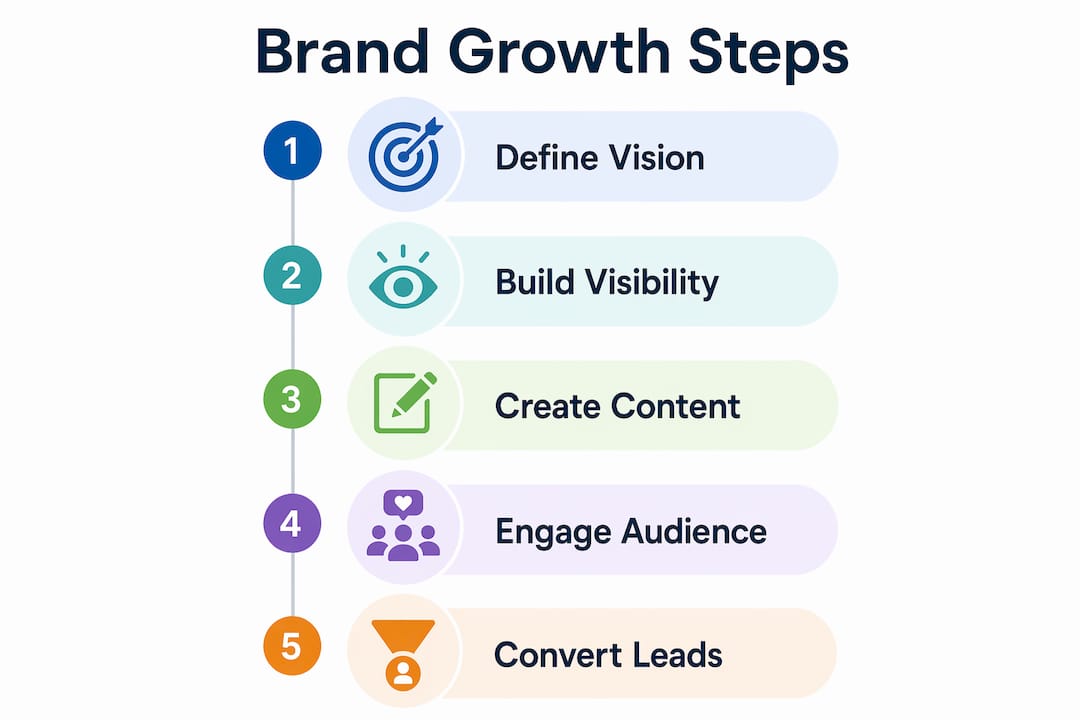
Your website is the anchor of your entire online presence for coaches. It must pass what branding experts call the 8-second clarity test. A visitor landing on your homepage has eight seconds to understand who you help, what problem you solve, and what to do next. If any of those three elements are unclear, you lose the lead. Most coaching websites fail this test because they lead with credentials rather than client outcomes.
Here is a content balance framework that works across niches:
| Content type | Purpose | Example formats |
|---|---|---|
| Educational | Builds authority and organic search visibility | Long-form articles, how-to guides, podcast episodes |
| Personal | Builds trust and emotional connection | Behind-the-scenes posts, values statements, career story |
| Social proof | Converts warm prospects | Client case studies, testimonials, transformation stories |
| Point of view | Creates memorability and filters ideal clients | Opinion pieces, contrarian takes, industry critiques |
Organic website rankings take three to six months to establish but then deliver compounding, long-term lead generation. That is the fundamental difference between owned content and paid ads. Paid traffic stops the moment you stop spending. A well-ranked article keeps working for years.
Repurposing is the multiplier that makes a focused content strategy sustainable. One long-form article becomes a LinkedIn post series, an email newsletter, a short video script, and a podcast talking point. You are not creating more content. You are extracting more value from the same idea.
How do networking and storytelling enhance a coach’s brand?
Networking is relationship-building, not contact collecting. Authentic networking tailored to your personality produces far better results than forcing yourself into formats that drain you. Introverted coaches often build stronger referral networks through focused one-on-one conversations than extroverted coaches who work every room but follow up with no one.
Storytelling is the mechanism that makes networking stick. When you meet a potential referral partner or prospective client, the story you tell about your work determines whether they remember you next week. Strong coaching brand stories follow a three-part structure:
- The journey: Where you started, what you struggled with, and what shifted. This creates relatability and positions your lived experience as a credential.
- The transformation: What you now believe and how that belief shapes your coaching approach. This communicates your point of view without sounding like a sales pitch.
- Client results: Specific, ethical examples of client outcomes. Specificity is what makes social proof credible. “My client doubled her revenue” is weak. “My client went from three discovery calls a month to fourteen within six months by clarifying her niche” is memorable.
Partnerships and referrals are the long-term payoff of consistent networking. A single strong referral relationship with a complementary professional, a therapist, an HR consultant, or a financial advisor can generate more qualified leads than six months of social media posting. Build those relationships with the same intentionality you bring to client work.
What common personal branding mistakes do coaches make?
Most branding failures for coaches come from the same handful of errors. Recognizing them early saves months of wasted effort.
- Trying to be everywhere at once. Spreading content across five platforms before mastering one produces mediocre results on all of them. Commit to one platform for 18 months before expanding.
- Oversharing personal details. Authentic does not mean unfiltered. Sharing every struggle, doubt, or personal crisis erodes the professional trust you are trying to build. Communicate values and lived experience without turning your brand into a therapy session.
- Confusing content metrics with brand recognition. High follower counts and viral posts feel like progress. They are not the same as a pipeline of qualified clients who trust your specific perspective. Vanity metrics and business results are different scoreboards.
- Lacking a clear point of view. A coach who agrees with everything and offends no one attracts no one in particular. The coaching niche is crowded. Generic positioning is invisible positioning.
- Neglecting a strategic body of work. Posting daily without building owned assets like articles, case studies, or a signature framework means your brand has no foundation. When the algorithm changes or the platform declines, your brand disappears with it.
Key takeaways
Personal branding for coaches succeeds when you combine a clear, specific point of view with consistent platform presence, a body of owned content, and authentic storytelling that communicates your values without oversharing.
| Point | Details |
|---|---|
| Distinct point of view | A specific, even polarizing perspective makes you memorable and attracts ideal clients. |
| Platform commitment | Showing up consistently on one platform for 18 months builds trust and recognition. |
| Body of work over volume | Ten deep-dive articles outperform hundreds of social posts for long-term brand authority. |
| AI as assistant, not author | Use AI tools after completing a Personal Branding Canvas to preserve your authentic voice. |
| Networking with intention | Tailored, personality-matched relationship-building generates stronger referrals than mass networking. |
What I have learned about building a coaching brand that lasts
I have watched coaches burn out chasing visibility before they had clarity. The pattern is always the same: post more, show up everywhere, chase the algorithm, and wonder why the right clients are not coming. The problem is never the volume. It is the absence of a clear, specific perspective that makes someone say “this coach is exactly who I need.”
The coaches who build durable brands do the uncomfortable work first. They define what they actually believe, including the parts that will alienate some people. They pick one platform and stay there long enough to matter. They write the article, record the talk, build the case study. They treat their brand as a long-term content asset rather than a daily performance.
AI is genuinely useful in this process, but only after the strategic foundation is solid. I have seen coaches use AI to produce polished, consistent content that sounds nothing like them. That is not a brand. That is a mask. The technology works when it amplifies a clear voice. It fails when it substitutes for one.
Protect your energy as fiercely as you protect your clients’ confidentiality. A sustainable brand is built at a pace you can maintain for years, not months. Calm, consistent, and specific beats loud, scattered, and generic every time.
— Take
How Take Action supports your coaching brand growth
Building a personal brand creates visibility. Converting that visibility into a reliable client pipeline requires a retention and nurture strategy that most coaches underestimate.
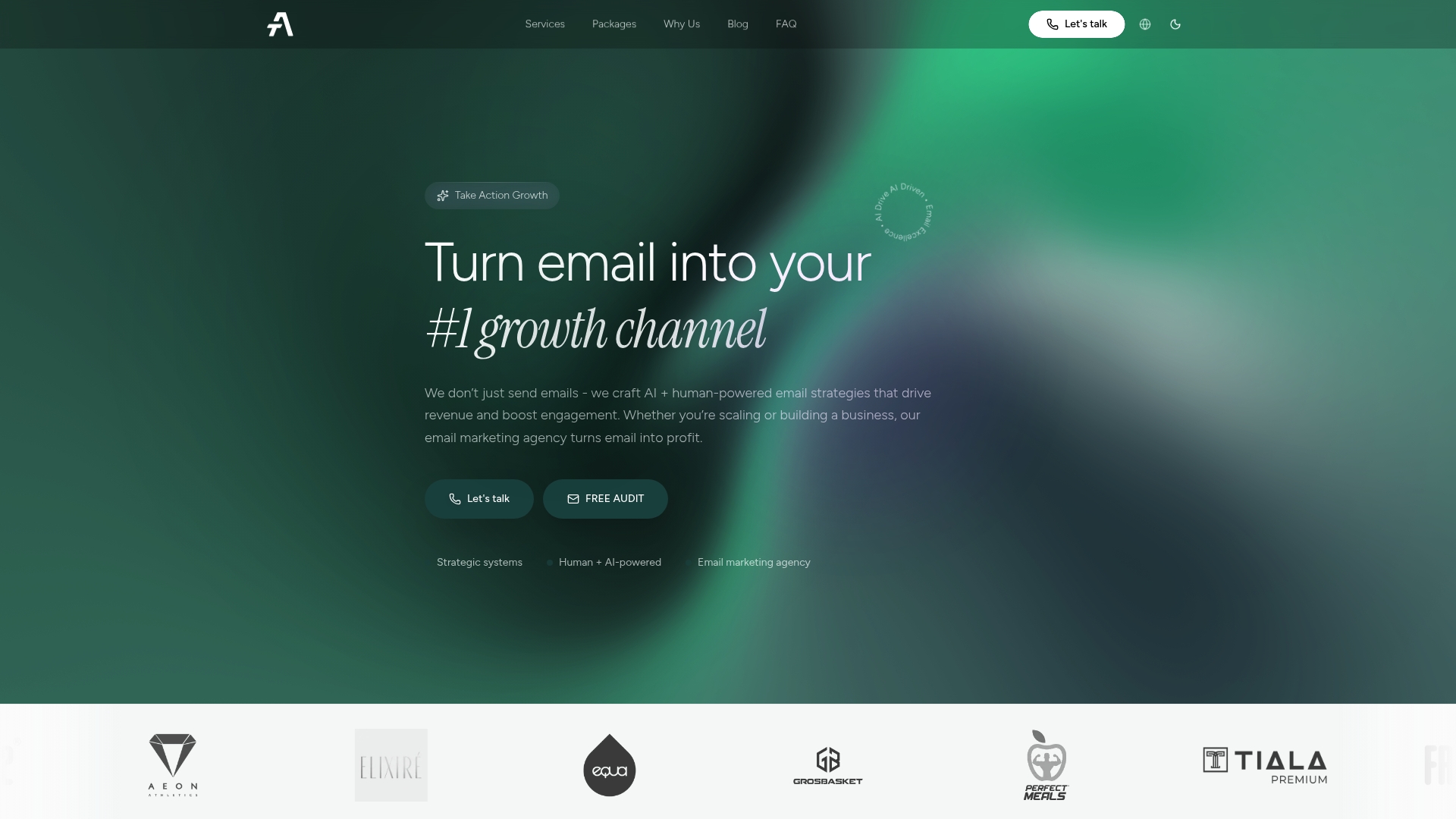
Take-action specializes in email marketing and retention strategies that turn your brand audience into long-term clients. When your personal brand attracts a prospect to your list, a well-structured email sequence, welcome flows, nurture campaigns, and re-engagement automations keeps your perspective in front of them until they are ready to buy. That is the difference between a brand that generates awareness and one that generates revenue. If you are ready to build that system, Take Action’s email marketing services are designed to align with your coaching voice and convert your audience at scale.
FAQ
What is personal branding for coaches?
Personal branding for coaches is the practice of consistently communicating your unique perspective, values, and expertise so ideal clients recognize and choose you. It functions as a professional asset that works even when you are not actively marketing.
How long does it take to build a coaching brand?
Building recognizable brand authority on a single platform takes at least 18 months of consistent presence. Organic website rankings that support lead generation typically take three to six months to establish.
Do coaches need AI tools for personal branding?
AI tools are useful for coaches who have already defined their positioning through a framework like the Personal Branding Canvas. Without that strategic foundation, AI produces generic content that weakens rather than strengthens a brand.
What content works best for a coaching brand?
A mix of educational articles, personal storytelling, and specific client success stories produces the strongest results. Ten high-quality owned articles on your website outperform hundreds of social media posts for long-term brand credibility.
What is the biggest personal branding mistake coaches make?
The most common mistake is lacking a clear, specific point of view. Coaches who try to appeal to everyone become invisible in a crowded niche. A distinct, even polarizing perspective is what makes a coaching brand memorable and choose-able.