

The Role of Klaviyo Integrations in Ecommerce Growth
TL;DR:
- Klaviyo integrations unify ecommerce data sources into a single customer profile for personalized marketing automation. They come in native, custom API, and hybrid models, enabling faster data sync and better segmentation. Proper strategy and data consolidation through integrations drive growth, retention, and omnichannel marketing effectiveness.
Klaviyo integrations are defined as the connective layer between your ecommerce tools and Klaviyo’s marketing platform, pulling customer data from dozens of sources into one place so you can send the right message at the right time. The role of Klaviyo integrations goes far beyond simple data transfers. They unify fragmented customer signals from loyalty apps, subscription services, help desks, and storefronts into a single customer profile that powers personalized email and SMS automation. With over 350 pre-built integrations, Klaviyo addresses the core problem most ecommerce brands face: too many tools, too little visibility. That fragmentation is the enemy of retention, and integrations are the fix.

What are the main types of Klaviyo integrations and how do they work?
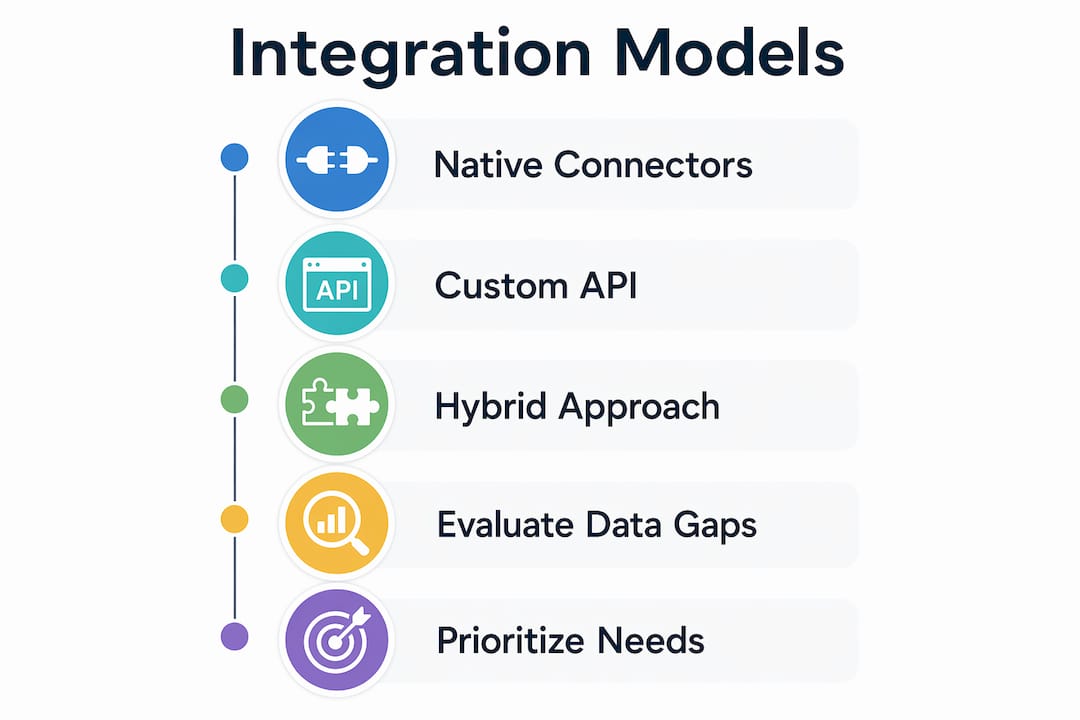
Klaviyo integrations fall into three primary models, and the one you choose determines how much control you have over your data and how precisely you can trigger automation.
Native pre-built connectors are the fastest path to integration. Platforms like Shopify, WooCommerce, and Recharge connect to Klaviyo in minutes with no code required. These connectors handle the most common data flows automatically, including order events, product views, and customer profile updates. They are the right choice for most ecommerce brands that do not have dedicated engineering resources.
Custom API integrations give you full control. Klaviyo provides six developer-facing APIs: Events, Profiles, Custom Metrics, Flows, Segments, and Templates. Each API targets a specific layer of your marketing stack. The Events API lets you push any custom action into Klaviyo as a trigger. The Profiles API lets you update customer attributes in real time. This model suits brands with unique data structures or proprietary platforms that no pre-built connector covers.
Hybrid models combine both approaches. A brand might use Shopify’s native connector for order data while using the Events API to push custom loyalty tier changes or subscription status updates. This gives you the speed of native connectors plus the precision of custom builds.
- Native connectors: fast setup, no code, covers most standard ecommerce events
- Custom API builds: full data control, requires developer time, ideal for unique workflows
- Hybrid models: best of both, used by mid-market and enterprise brands with complex stacks
Pro Tip: If you are evaluating which model fits your business, start with native connectors and identify the data gaps. Those gaps tell you exactly where a custom API call will add the most value.
How do Klaviyo integrations improve ecommerce marketing effectiveness?
The biggest practical benefit of Klaviyo integrations is speed. Klaviyo’s Customer Data Platform processes event data in under 90 seconds for mid-market brands running on Shopify. Legacy CDP solutions can take 4–6 hours to sync the same data. That gap matters enormously for time-sensitive flows like abandoned cart recovery, where a 90-second trigger window beats a 4-hour delay every time.
Faster data sync also means your segments stay accurate. When a customer upgrades their loyalty tier, Klaviyo knows within seconds and can immediately shift them into a higher-value segment. That kind of real-time segmentation accuracy is what separates a generic broadcast from a message that feels personal.
Klaviyo’s integrated customer profiles fuel predictive models including churn probability and next purchase likelihood. These models let you act before a customer drifts away, not after. You can build a segment of customers with high churn probability and trigger a win-back flow automatically, without any manual intervention.
The broader impact on your marketing stack is just as significant. Consolidating on Klaviyo reduces what practitioners call “integration debt,” the hidden cost of maintaining multiple point-to-point connections between tools. When you cut those redundant connections, you free up engineering time and reduce the risk of data inconsistencies across your stack. For a deeper look at how this plays out in practice, Take-action’s guide on Klaviyo automation and engagement walks through specific flow setups that benefit directly from faster data sync.
Unified data also makes your omnichannel marketing far more coherent. When email, SMS, and paid retargeting all draw from the same customer profile, your messaging stays consistent across every channel a customer touches.
What are the limitations and considerations when using Klaviyo integrations?
Klaviyo integrations are built for asynchronous, scheduled, and triggered marketing automation. They are not designed for real-time conversational support or immediate response workflows. If a customer sends a live chat message or calls your support line, Klaviyo cannot handle that interaction. You need a dedicated communication platform for those use cases.
This distinction matters because many ecommerce brands assume that integrating Klaviyo with their help desk means they have covered all customer communication. They have not. Klaviyo will receive data from that help desk, such as ticket status or resolution events, and use it to trigger follow-up emails. But the live conversation itself happens outside Klaviyo entirely.
Other limitations worth knowing before you build:
- Integrations move data into Klaviyo, but they do not build your flows for you. A Shopify integration will send order data, but you still need to configure the abandoned cart or post-purchase flow to act on it.
- Integration debt costs often exceed software subscription costs when you factor in agency upkeep, engineering hours, and duplicated tools across your stack.
- Custom API builds require ongoing maintenance. API versions change, and a build that works today may need updates when Klaviyo releases a new API version.
- Not all integrations sync bidirectionally. Many push data into Klaviyo but do not write data back to the source system.
Pro Tip: Before adding any new integration, map out exactly which data points you need and which flows will consume them. An integration without a downstream flow is just noise in your data layer.
How can ecommerce businesses strategically use Klaviyo integrations for growth?
The most effective Klaviyo integration strategies start with a clear picture of your customer data gaps. 60% of B2C businesses maintain between 6 and 15 separate tools in their tech stacks. That fragmentation means customer behavior is scattered across platforms, and no single tool has the full picture. Klaviyo integrations solve this by pulling those signals together so you can act on the complete customer story.
Here is a practical framework for building your integration strategy:
- Audit your current stack. List every tool that holds customer data: your ecommerce platform, loyalty program, subscription service, returns app, and help desk. Identify which of these have native Klaviyo connectors.
- Map data to flows. For each integration, define which customer events should trigger a Klaviyo flow. A loyalty tier upgrade should trigger a personalized reward email. A subscription cancellation should trigger a win-back sequence.
- Prioritize by revenue impact. Abandoned cart and post-purchase flows typically deliver the highest return. Connect the data sources that feed those flows first.
- Add predictive layers. Once your core integrations are live, use Klaviyo’s predictive analytics to build segments based on churn probability and next purchase likelihood. These segments power your most targeted campaigns.
- Expand to omnichannel. Use integrated data to sync Klaviyo segments with your paid advertising audiences. A customer who just made their third purchase should not see a first-time buyer discount ad.
Klaviyo integrations can feed data from loyalty platforms, subscription services, returns apps, and help desk tools to enrich customer profiles and trigger specific automated flows. A returns event, for example, can automatically initiate a re-engagement sequence with a personalized product recommendation. A loyalty tier change can shift a customer into a VIP segment and trigger a tailored offer within minutes.
The brands that get the most from Klaviyo integrations treat them as a data infrastructure investment, not a one-time setup task. Take-action’s case study on social media and Klaviyo shows what happens when integrated data powers cross-channel personalization at scale. The shift toward 1:1 personalization in ecommerce loyalty marketing depends entirely on having that consolidated, integrated data foundation in place.
For brands thinking about long-term retention, a marketing automation checklist can help you sequence integration priorities against your actual campaign calendar, so you build the right connections before you need them.
Key Takeaways
Klaviyo integrations are the data foundation that makes personalized, automated ecommerce marketing possible at scale.
| Point | Details |
|---|---|
| Three integration models | Native connectors, custom API builds, and hybrid approaches each serve different data control needs. |
| Speed advantage | Klaviyo syncs event data in under 90 seconds, versus 4–6 hours for legacy CDP solutions. |
| Predictive segmentation | Integrated profiles power churn probability and next purchase models for targeted campaigns. |
| Real limitations exist | Klaviyo handles triggered automation, not live conversational support. Separate tools are required for that. |
| Strategy before setup | Map every integration to a specific flow and revenue outcome before connecting any new tool. |
What I’ve learned from watching brands get integrations wrong
Most ecommerce brands treat Klaviyo integrations as a technical checkbox. Connect Shopify, connect the loyalty app, move on. That approach leaves most of the value on the table.
What I have seen work is treating integrations as a data strategy question, not an IT task. The brands that grow fastest with Klaviyo are the ones who ask “what customer behavior do I need to see, and which tool holds that signal?” before they touch a single integration setting. They build backward from the flow they want to run, then connect the data source that makes it possible.
The shift that changes everything is moving from broadcast email to triggered, profile-driven messaging. That shift only happens when your integrations are feeding clean, timely data into Klaviyo. A loyalty tier update that takes 6 hours to sync is useless for a time-sensitive offer. A returns event that never reaches Klaviyo means a re-engagement flow never fires.
Klaviyo’s CDP capabilities are also compressing what agencies need to bill for. Simpler integration complexity means more time spent on strategy and less on plumbing. That is good news for brands, but only if they have a partner who knows how to use the freed-up capacity on the right campaigns. The brands I respect most are the ones who consolidate their stack deliberately, cut the tools that duplicate function, and then invest the savings into better segmentation and creative. That is where the real retention gains live.
— Take
How Take-action helps brands get more from Klaviyo integrations
Connecting tools to Klaviyo is the easy part. Turning that connected data into revenue is where most brands stall.
Take-action is a specialized email marketing and retention agency that builds and manages Klaviyo integration strategies for ecommerce brands. The team handles everything from data consolidation and flow architecture to segmentation design and campaign execution. If your abandoned cart flow is not firing correctly, your post-purchase sequence is generic, or your loyalty data is sitting disconnected from your email platform, Take-action fixes the infrastructure and builds the campaigns on top of it. Work with Take-action to turn your Klaviyo integrations into a measurable retention engine.
FAQ
What is the role of Klaviyo integrations in ecommerce?
Klaviyo integrations connect your ecommerce tools, including your store platform, loyalty program, and subscription service, into a single customer data platform that powers personalized email and SMS automation.
How many integrations does Klaviyo support?
Klaviyo supports over 350 pre-built integrations, covering ecommerce platforms, loyalty apps, subscription services, shipping tools, and help desks.
Can Klaviyo integrations handle real-time customer support?
No. Klaviyo integrations support triggered and scheduled marketing automation but do not handle live conversational support or immediate response workflows. Separate communication tools are required for that.
What is the data sync speed for Klaviyo integrations?
Klaviyo’s Customer Data Platform processes event data in under 90 seconds for Shopify-based brands, compared to 4–6 hour sync windows in legacy CDP solutions.
How do I choose the right Klaviyo integration model?
Start with native pre-built connectors for standard ecommerce events, then identify data gaps that require custom API builds using Klaviyo’s six developer-facing APIs: Events, Profiles, Custom Metrics, Flows, Segments, and Templates.