

The Role of Email in Ecommerce: Drive Real Revenue
TL;DR:
- Email marketing provides the highest return on investment in ecommerce, generating $36 to $40 per dollar spent. Automated, behavior-triggered sequences significantly improve engagement and revenue, while ownership of email lists ensures consistent reach unaffected by platform changes. Implementing personalized segmentation and adhering to technical deliverability best practices are vital for maximizing email performance and revenue growth.
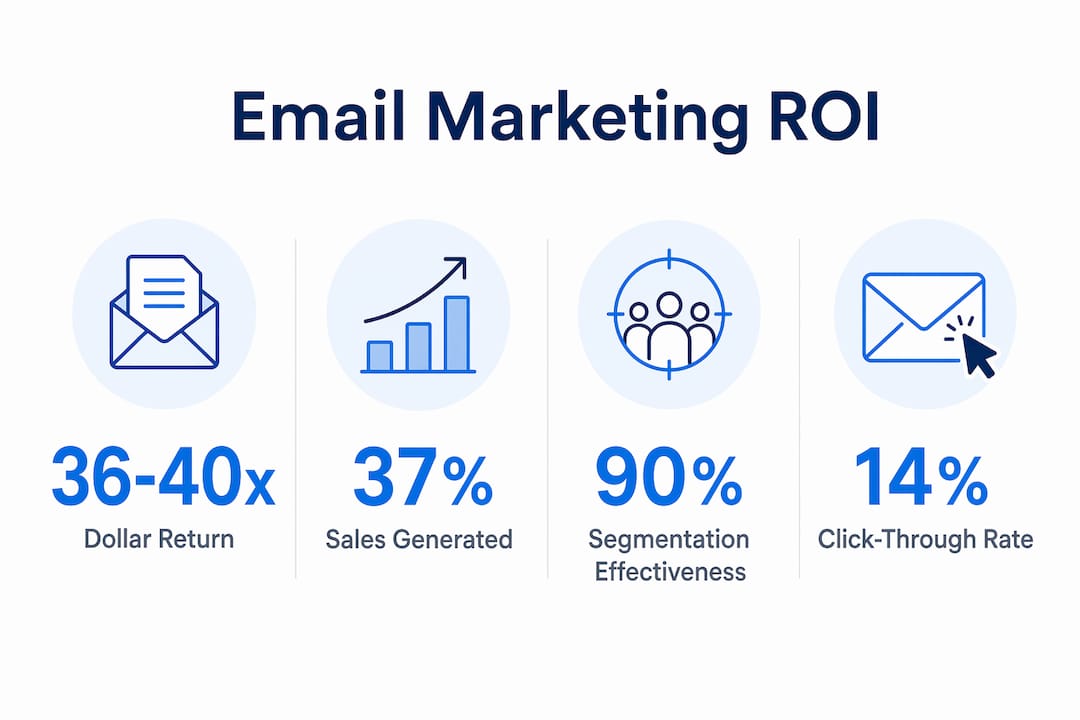
Email marketing is the highest-ROI channel in ecommerce, returning $36 to $40 for every dollar spent. That number alone explains why brands like Dapper Boi and Chandler Honey have built their retention engines on email rather than paid ads. Unlike Instagram or Google, email gives you direct, unfiltered access to your customers. No algorithm decides who sees your message. No platform policy change wipes out your reach overnight. The role of email in ecommerce is not supplementary. It is the primary channel for turning one-time buyers into loyal customers who spend more, return more often, and refer others.
How does email marketing drive customer engagement and retention?
Email connects the entire ecommerce customer journey by moving subscribers from first touch to repeat purchase through structured, automated sequences. The mechanism is not complicated, but the execution separates brands that grow from brands that plateau.

The most effective email programs use behavioral triggers rather than calendar-based blasts. When a customer browses a product category without buying, a triggered browse-abandonment email fires within hours. When someone completes a purchase, a post-purchase sequence begins automatically, delivering order confirmation, shipping updates, a review request, and a cross-sell recommendation in a timed cadence. These touchpoints feel personal because they respond to what the customer actually did.
Automation is where the math gets interesting. Automated emails represent just 2% of total email volume but drive 37% of email-generated sales. One in three subscribers who click an automated email completes a purchase. That conversion rate is not achievable through broadcast campaigns alone. It requires the right message at the right moment, which automation delivers without manual effort.
Here is what a high-performing engagement sequence looks like in practice:
- Welcome series: Introduces the brand, sets expectations, and delivers an incentive within the first 24 hours of signup
- Abandoned cart emails: Recover lost revenue by reminding shoppers of items left behind, typically sent at one hour, 24 hours, and 72 hours after abandonment
- Post-purchase flows: Build loyalty by thanking customers, requesting reviews, and recommending complementary products
- Win-back campaigns: Re-engage subscribers who have not opened or clicked in 90 to 180 days before removing them from the active list
- Loyalty and VIP sequences: Reward high-frequency buyers with early access, exclusive offers, or tiered perks
Pro Tip: Set up your abandoned cart flow before any other automation. It is the fastest path to measurable ROI and typically recovers 5% to 15% of otherwise lost revenue within the first month.
What are the benefits of owning email versus relying on social media or paid ads?
Email is owned media. That distinction matters more than most ecommerce marketers realize until a platform changes its algorithm or a paid channel becomes unprofitable. When you build an email list, you own that asset. No third party can restrict your reach, raise your costs, or suspend your account without warning.
Social media platforms control who sees your organic posts. Meta’s algorithm currently shows organic brand content to a fraction of followers. Paid ads on Google and Meta deliver results, but the moment you stop spending, the traffic stops. Email does neither of those things. A subscriber who opted in three years ago is still reachable today at near-zero marginal cost.
The strategic advantages of email ownership compound over time:
- Direct reach to opted-in subscribers who have explicitly consented to hear from you, which means higher baseline engagement than any cold channel
- Full control over timing and message so you can respond to inventory changes, seasonal events, or competitive shifts without waiting for ad approval
- Engagement data as a marketing asset that feeds into paid retargeting and lookalike modeling, lowering customer acquisition costs across all channels
- Predictable revenue contribution that does not fluctuate with auction-based pricing or platform policy changes
“Email engagement data serves as a foundational asset for optimizing paid retargeting and lookalike audiences, lowering customer acquisition costs beyond what traditional last-click models capture.” — abmatic.ai
The synergy between email and paid channels is underused. When you upload your most engaged email segments to Meta or Google as custom audiences, you are targeting people who already trust your brand. The conversion rates on those paid campaigns are significantly higher than cold prospecting, and the cost per acquisition drops accordingly.
How to implement personalization and segmentation for higher email ROI
True revenue-driving personalization means dynamic segmentation and behavior-triggered messaging, not just inserting a first name into a subject line. The brands generating the most from email in 2026 treat every subscriber as a segment of one.
Personalized email campaigns improve click-through rates by 14% and conversion rates by 10%. Those gains come from relevance. A customer who bought running shoes does not need a generic newsletter. They need a recommendation for running socks, a restock alert for their shoe size, or a training plan that pairs with their purchase. That specificity is what drives clicks.
Here is how basic and advanced personalization compare in practice:
| Approach | Tactic | Expected impact |
|---|---|---|
| Basic personalization | First name in subject line | Marginal open rate lift |
| Behavioral triggers | Browse and cart abandonment emails | 5x to 10x higher conversion vs. broadcast |
| Purchase-based recommendations | Cross-sell and upsell sequences | Increased average order value |
| Lifecycle segmentation | VIP, at-risk, and lapsed buyer flows | Improved retention and reactivation |
| AI-driven send time optimization | Dynamic delivery based on individual open patterns | Higher open rates at scale |
More than 90% of email marketers say segmentation improves campaign performance. The most effective segments for ecommerce are purchase frequency, product category affinity, geographic location, and engagement recency. Klaviyo makes this segmentation accessible without a data science team, using pre-built filters that update in real time as customer behavior changes.
AI-driven tools now enable scalable personalization without manual workload. Subject line testing, content block swapping, and send time optimization all run automatically when configured correctly. For ecommerce brands scaling past a few thousand subscribers, manual segmentation becomes a bottleneck. AI removes that bottleneck.
Pro Tip: Build a birthday or anniversary flow for your top customer segments. A personalized offer sent on a customer’s birthday consistently outperforms standard promotional emails in both open rate and revenue per recipient.
Explore automated workflows for ecommerce to see how these sequences are structured across different retail categories.
What technical practices protect deliverability and email performance?
Deliverability is the foundation every email strategy rests on. A perfectly written campaign generates zero revenue if it lands in the spam folder. SPF, DKIM, and DMARC authentication are now mandatory requirements. Major mailbox providers including Google and Yahoo tightened sender requirements in 2024, and non-authenticated domains face automatic filtering or outright rejection.
Beyond authentication, list hygiene determines whether your sender reputation improves or deteriorates over time. Removing inactive subscribers after 90 to 180 days of no engagement is not optional. High volumes of unengaged recipients signal to mailbox providers that your content is unwanted, which suppresses deliverability for your entire list, including your most engaged buyers.
The core technical and strategic practices that protect email performance:
- Authenticate your domain with SPF, DKIM, and DMARC before sending a single campaign
- Monitor sender reputation using tools like Google Postmaster Tools and MXToolbox to catch deliverability issues early
- Suppress unengaged subscribers on a rolling 90 to 180 day cycle rather than waiting for annual list cleaning
- Warm up new sending domains gradually, starting with your most engaged segments before expanding to the full list
- Track the metrics that matter: open rate, click-through rate, revenue per email, and unsubscribe rate by segment
The metrics worth tracking shift depending on your program maturity. Early-stage programs should prioritize open rate and click-through rate as indicators of list quality. Mature programs should focus on revenue per email and customer lifetime value by acquisition source. Aligning these metrics with your broader marketing objectives, including paid channel performance, gives you a complete picture of how email contributes to total revenue.
Avoid the common email mistakes that quietly erode deliverability and engagement before you notice the damage.
Key takeaways
Email drives ecommerce revenue through owned-channel reach, behavioral automation, and segmentation that no paid or social channel can replicate at the same cost efficiency.
| Point | Details |
|---|---|
| ROI advantage | Email returns $36 to $40 per $1 spent, outperforming paid social and search. |
| Automation impact | Automated flows drive 37% of email sales despite being just 2% of volume. |
| Owned media value | Email lists are brand assets unaffected by algorithm changes or ad platform costs. |
| Personalization lift | Segmented, behavior-triggered campaigns improve conversions by 10% over generic sends. |
| Deliverability foundation | SPF, DKIM, and DMARC authentication are non-negotiable for inbox placement in 2026. |
Why I think most ecommerce brands are still underusing email
After working with ecommerce brands across multiple verticals, the pattern I see most often is this: brands invest heavily in paid acquisition, then treat email as an afterthought. They send a promotional blast once a week, wonder why open rates are declining, and conclude that email does not work for them. The channel is not the problem. The strategy is.
The brands generating 30% to 40% of their total revenue from email are not sending more emails. They are sending smarter ones. They have welcome flows that convert new subscribers within 48 hours. They have post-purchase sequences that increase average order value without a single paid impression. They use their email engagement data to build better paid audiences, which lowers their cost per acquisition across every channel simultaneously.
The shift I would push every ecommerce marketer to make right now is from broadcast thinking to relationship thinking. Stop asking “what should we promote this week?” and start asking “where is this customer in their relationship with us, and what do they need to hear next?” That reframe changes everything about how you build flows, write copy, and measure success.
List hygiene is the unglamorous discipline that separates programs with 35% open rates from programs with 18% open rates. Prune aggressively. A smaller, engaged list outperforms a bloated, disengaged one every time, both in deliverability and in revenue per subscriber.
— Take
Ready to turn email into your top revenue channel?
Take-action specializes in building email programs that do exactly what this article describes, at scale, for ecommerce brands that are serious about retention and revenue growth.
From Klaviyo flow architecture to segmentation strategy and deliverability setup, Take-action handles the technical and creative work so your email channel performs like a growth engine rather than a broadcast tool. The agency’s email marketing services are built specifically for ecommerce brands that want measurable results, not just open rates. If you are ready to stop leaving revenue on the table, Take-action is the partner built for that conversation.
FAQ
What is the average ROI of email marketing for ecommerce?
Email marketing delivers an average return of $36 to $40 for every $1 spent in ecommerce, making it one of the highest-ROI channels available. This figure consistently outperforms paid social and paid search on a cost-per-revenue basis.
How do automated emails drive ecommerce sales?
Automated emails account for just 2% of total email volume but generate 37% of email-driven sales, according to Omnisend data. Welcome flows, abandoned cart sequences, and post-purchase emails are the three highest-performing automation types for online stores.
Why is email considered an owned marketing channel?
Email is owned media because the subscriber list belongs to the brand, not a third-party platform. Unlike social media reach or paid ad traffic, email access to your audience does not depend on algorithm changes or advertising budgets.
How does segmentation improve email campaign performance?
More than 90% of email marketing professionals report that segmentation improves campaign performance. Dividing your list by purchase history, engagement recency, and product affinity allows you to send messages that match where each customer is in their buying journey.
What technical steps protect email deliverability?
Authenticating your sending domain with SPF, DKIM, and DMARC is the first requirement for inbox placement. Removing unengaged subscribers every 90 to 180 days and monitoring sender reputation through Google Postmaster Tools are the ongoing practices that sustain deliverability over time.