

Subscription Retention Email: A Complete 2026 Guide
TL;DR:
- Subscription retention emails are automated messages triggered by subscriber behavior to reduce cancellations and increase engagement. Utilizing behavioral signals and AI personalization, these emails target at-risk subscribers with specific strategies like renewal reminders and pause options. They are vital for lowering churn, improving lifetime value, and maintaining cost-effective customer retention.
A subscription retention email is an automated, lifecycle-driven message designed to keep paying customers engaged, reduce churn, and reinforce the value of their subscription. Acquiring a new customer costs 5–7 times more than keeping an existing one. That math alone makes retention email one of the highest-return activities in ecommerce. This guide breaks down what subscription retention email means in practice, which types work best, and how to build a program that actually stops subscribers from leaving.
What is a subscription retention email and why does it matter?
A subscription retention email is any automated message sent after the initial conversion with the goal of keeping a subscriber active and satisfied. The industry term for this category is “lifecycle email,” and retention emails sit at the heart of every effective lifecycle program. They are not one-off promotions. They are triggered, timed, and personalized messages that respond to subscriber behavior.

The cost argument is straightforward. Churn rates as low as 5% can cause more than 50% annual customer loss when compounded. A subscriber who cancels in month three never reaches the higher lifetime value that makes subscription businesses profitable. Retention emails interrupt that exit path before it becomes permanent.
The importance of retention emails also shows up in channel performance. Email averages a 21.33% open rate across formats, which is higher than most paid social channels. That reach, combined with automation, makes email the most cost-effective tool for keeping subscribers engaged at scale.
What are the most effective subscription retention email strategies?
The most effective retention email strategies are lifecycle-driven and triggered by subscriber behavior, not by a marketing calendar. Generic blast emails do not retain subscribers. Signal-based messaging does.
The core strategies that consistently reduce churn include:
- Welcome and onboarding sequences. 25% of mobile app users churn within minutes of sign-up. A strong welcome flow that shows subscribers how to get value immediately is the single most important retention investment.
- Milestone celebrations. Emails that mark a subscriber’s 30-day, 90-day, or one-year anniversary reinforce the relationship. They remind subscribers why they signed up and make them feel recognized.
- Renewal reminders. Sending a reminder 7–14 days before a billing date reduces surprise cancellations and gives subscribers a chance to update payment details proactively.
- Behavioral re-engagement. When a subscriber stops opening emails or logging in, a targeted nudge based on that inactivity signal outperforms any generic promotion.
- Flexible subscription management prompts. Offering options to pause, downgrade, or swap products keeps subscribers who would otherwise cancel outright.
AI-driven segmentation makes all of these strategies more precise. Platforms like Klaviyo allow ecommerce brands to segment by usage depth, subscription tier, and purchase history, so each message reaches the right subscriber at the right moment.
Pro Tip: Avoid over-discounting as a default retention move. Repeatedly offering price cuts trains subscribers to expect them and erodes margin. Lead with value and flexibility first.
Which types of retention emails most successfully reduce churn?
Different churn triggers require different email types. Sending the wrong message at the wrong moment accelerates cancellation rather than preventing it.
- Renewal reminder emails. Sent 7–14 days before a charge, these reduce involuntary cancellations caused by outdated payment details and give subscribers time to reconsider their plan.
- Pre-dunning and payment retry emails. Up to 40% of subscription churn is involuntary and payment-related. Sending a pre-dunning email 3–7 days before a known charge date recovers a significant portion of this lost revenue.
- Pause flow emails. When a subscriber signals intent to cancel, offering a pause option recovers subscribers without requiring a discount. Pause flows recover 12–18% of customers who would otherwise churn, and three out of four subscribers who pause eventually return to active status.
- Win-back and reactivation emails. Sent after a lapse, these target former subscribers with a specific reason to return, such as a new product, a feature update, or a personalized offer based on their past behavior.
- Milestone and anniversary emails. These celebrate subscriber tenure and reinforce the value already received, making cancellation feel like a loss rather than a neutral decision.
| Email type | Primary churn trigger addressed |
|---|---|
| Renewal reminder | Surprise billing, plan uncertainty |
| Pre-dunning | Failed payments, outdated card details |
| Pause flow | Temporary dissatisfaction or budget pressure |
| Win-back | Post-cancellation reactivation |
| Milestone celebration | Low engagement, declining perceived value |
Smart dunning programs go further by personalizing retry messaging based on the specific payment failure reason. A card expiry message differs from a declined card message. Matching the copy to the failure type yields better recovery rates than a generic retry email.
How can AI and personalization improve subscription retention emails?
AI changes retention email from a broadcast activity into a conversation. Predictive churn scoring identifies which subscribers are most likely to cancel before they show obvious signals, allowing brands to intervene earlier and more precisely.
AI-driven retention campaigns reduce churn by up to 20%. That reduction comes from three specific capabilities: better segmentation, dynamic message content, and timing optimization. Each of these is difficult to execute manually at scale but straightforward with a platform like Klaviyo.
Behavioral signals that should trigger personalized outreach include:
- A drop in login frequency or product usage
- A failed payment attempt
- A support ticket about pricing or cancellation
- A product return or negative review
- Approaching a renewal date without recent engagement
“Continuous experimentation and AI-driven signal detection are crucial to timely retention interventions in fast-evolving subscription markets.” — Subsets, 2026
Artifact-based language takes personalization further. Instead of writing “your account,” a retention email references specific items the subscriber has used, ordered, or saved. “You’ve completed 12 workouts this month” outperforms “your membership is renewing soon” because it makes the value concrete and personal. This approach works across ecommerce verticals, from beauty subscription boxes to software tools to meal kits.
For ecommerce brands building out their email personalization strategy, the combination of behavioral triggers and artifact-based copy is the highest-impact place to start.
What best practices maximize subscription retention email success?
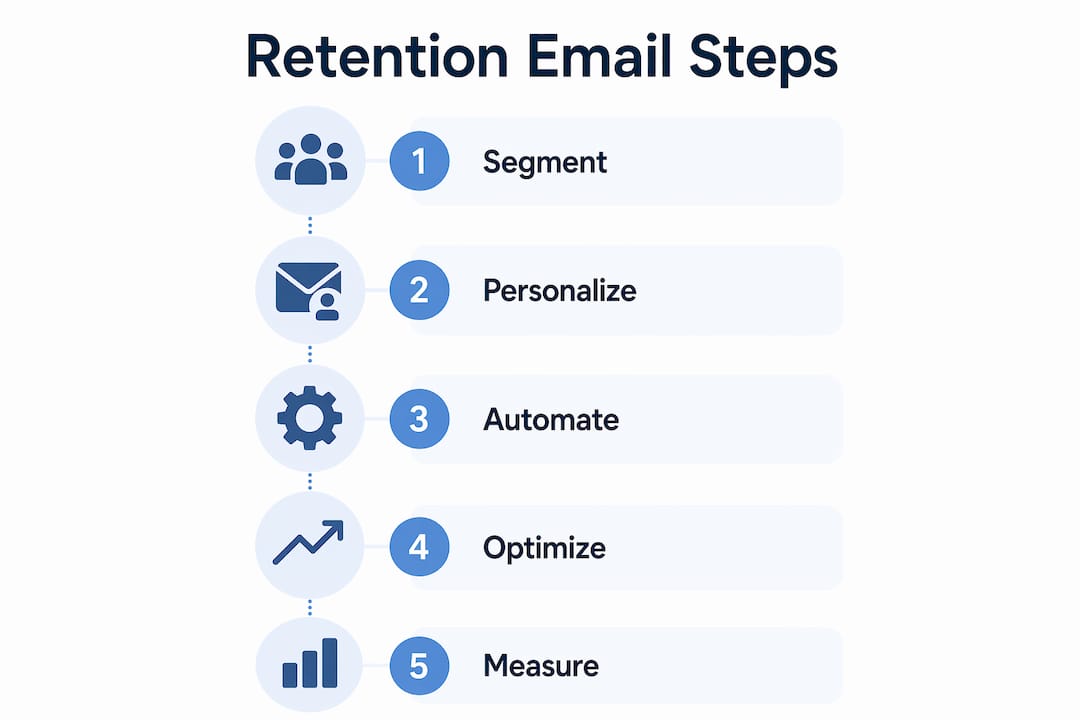
The most common mistake in retention email programs is treating every subscriber the same. Segmentation by usage depth, subscription tenure, and plan tier is the baseline for any program that performs above average.
Frequency matters as much as content. Sending too many retention emails creates fatigue and increases unsubscribes. Sending too few means missing the window when a subscriber is still recoverable. A general rule is to increase email frequency as churn risk rises, not as a default setting for all subscribers.
Cancellation flows deserve specific attention. A transparent cancel button and optional save flows build trust rather than frustrate subscribers. Some jurisdictions legally require easy cancellation. Beyond compliance, a clean exit with a pause option or a downgrade offer leaves the door open for reactivation. Subscribers who feel trapped cancel and never return. Subscribers who feel respected sometimes come back.
Pro Tip: Build your dunning sequence before you build your win-back sequence. Fixing involuntary churn through pre-dunning emails is faster and cheaper than reactivating subscribers who have already left.
Annual plan incentives also reduce churn structurally. Annual plans with discounts reduce churn by 51% compared to monthly plans. A retention email that offers a monthly subscriber the option to switch to an annual plan at a reduced rate is one of the highest-ROI messages in any subscription program.
For practical subscription email examples and newsletter ideas that apply these principles, the ecommerce newsletter ideas guide from Take-action covers specific formats that work for subscription-based retail brands.
Key takeaways
Subscription retention emails work because they address churn at the source, using the right message, at the right moment, for the right subscriber.
| Point | Details |
|---|---|
| Define retention email correctly | It is a lifecycle-driven, automated message triggered by subscriber behavior, not a generic blast. |
| Fix involuntary churn first | Pre-dunning emails address up to 40% of churn before it happens, at minimal cost. |
| Use pause flows before discounts | Pause flows recover 12–18% of at-risk subscribers without eroding margin. |
| Segment by behavior and tenure | Usage depth and plan tier determine which message a subscriber needs, not their email address alone. |
| AI improves timing and relevance | Predictive churn scoring and artifact-based copy reduce churn by up to 20% in AI-driven programs. |
What I’ve learned about retention email after years of building these programs
Most ecommerce brands treat retention email as a rescue operation. A subscriber signals cancellation intent, and the team scrambles to send a discount. That model is reactive, expensive, and trains subscribers to wait for a deal before renewing.
The brands that retain subscribers at the highest rates treat retention as a continuous process that starts with the welcome email. Retention starts on day one, not when a subscriber is already halfway out the door. The welcome sequence, the first milestone email, the first renewal reminder. These are all retention emails, and they matter more than any win-back campaign.
The other thing most brands get wrong is discounting. Offering 20% off to every subscriber who clicks “cancel” feels like retention. It is actually margin erosion with a delay. The better move is to understand why a subscriber is leaving and respond to that specific reason. Budget pressure calls for a pause option. Feature confusion calls for an onboarding nudge. Dissatisfaction calls for a direct conversation, not a coupon.
Behavioral retention signals tell you what a subscriber needs before they tell you themselves. A drop in login frequency is a warning. A support ticket about pricing is a warning. Building automations that respond to those signals is what separates brands with strong retention from brands that are constantly chasing new customers to replace the ones they lost.
The final thing worth saying: test everything. Subject lines, send times, pause flow copy, dunning sequences. The subscription market moves fast, and what worked in 2024 may not work in 2026. Continuous testing is not optional. It is the mechanism that keeps a retention program effective over time.
— Take
How Take-action helps ecommerce brands retain more subscribers
Take-action builds and manages subscription retention email programs for ecommerce brands using Klaviyo. The agency designs full lifecycle flows, from welcome sequences to pre-dunning automations to win-back campaigns, all mapped to subscriber behavior and business goals.
Every program Take-action builds starts with a churn audit to identify where subscribers are leaving and why. From there, the team builds segmented flows, tests copy and timing, and monitors performance metrics including open rates, recovery rates, and churn reduction. For ecommerce brands ready to turn email into a primary retention channel, Take-action’s retention services offer a direct path from strategy to results.
FAQ
What is a subscription retention email?
A subscription retention email is an automated, lifecycle-driven message sent to keep paying subscribers engaged and reduce cancellations. It is triggered by subscriber behavior or billing events, not sent on a fixed marketing calendar.
How often should you send retention emails?
Frequency should increase as churn risk rises. Low-risk subscribers need fewer touchpoints. Subscribers showing disengagement signals, such as inactivity or a failed payment, need more targeted outreach within a shorter window.
What is the best type of retention email for reducing churn?
Pre-dunning emails that address payment failures 3–7 days before a charge date recover the largest share of at-risk subscribers, since up to 40% of subscription churn is involuntary and payment-related.
How does AI improve retention email performance?
AI identifies behavioral churn signals early, personalizes message content based on subscriber data, and optimizes send timing. AI-driven retention campaigns reduce churn by up to 20% compared to generic email programs.
What should you include in a retention email?
A retention email should include a specific reference to the subscriber’s usage or history, a clear value reminder, and a flexible next step such as a pause option, a plan change, or a direct path to resolve a billing issue.