

Content audit checklist for ecommerce email success 2026
Ecommerce brands pour resources into email marketing, yet many struggle with stagnant engagement and disappointing retention. The problem often lies not in the strategy itself but in scattered, outdated, or misaligned content that fails to resonate with subscribers. Without a systematic approach to reviewing what you send, opportunities slip through the cracks. This guide delivers an actionable content audit checklist designed specifically for ecommerce marketers using Klaviyo in 2026, helping you identify gaps, optimize messaging, and turn email into your most reliable growth channel.
Table of Contents
- Preparing Your Ecommerce Email Content Audit
- Executing The Content Audit Checklist Step By Step
- Common Mistakes And Tips To Optimize Your Email Content Audit
- Verifying Results And Next Steps After Your Content Audit
- Enhance Your Ecommerce Email Strategy With Expert Support
- Frequently Asked Questions
Key takeaways
| Point | Details |
|---|---|
| Systematic audits boost relevance | Regular content reviews identify engagement gaps and improve email performance across campaigns and flows. |
| Preparation drives efficiency | Organizing metrics, goals, and tools before starting saves time and ensures thorough analysis. |
| Detailed execution reveals opportunities | Step by step review of subject lines, copy, technical elements, and triggers uncovers optimization potential. |
| Metric tracking validates impact | Monitoring KPIs post audit confirms improvements and guides ongoing content strategy adjustments. |
Preparing your ecommerce email content audit
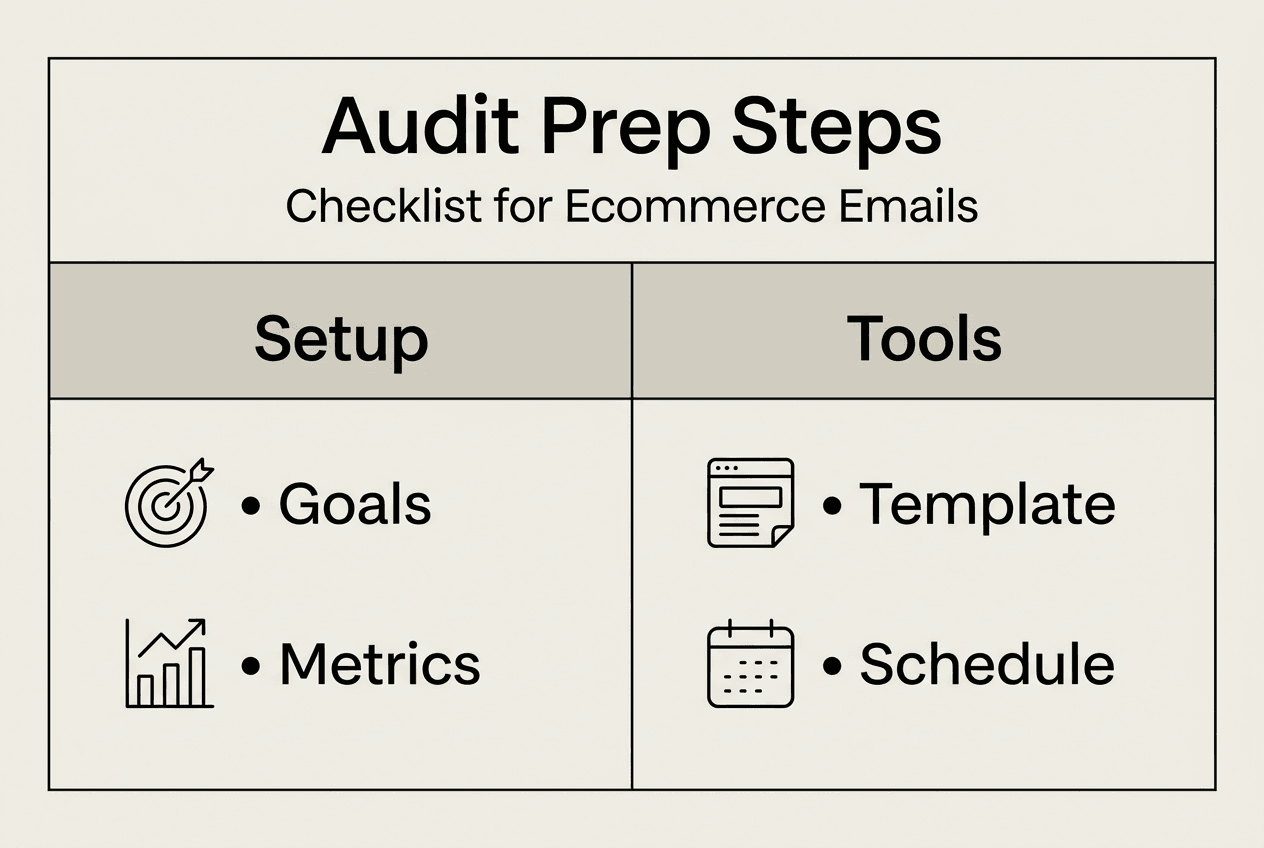
Before diving into the audit itself, you need a solid foundation. Skipping preparation leads to incomplete analysis and wasted effort. Start by gathering every email asset in your Klaviyo account, including automated flows like welcome series, abandoned cart sequences, post purchase follow ups, and promotional campaigns from the past quarter. This comprehensive collection gives you the full picture of what subscribers actually receive.
Next, define specific audit goals aligned with your business objectives. Are you trying to reduce unsubscribe rates, boost click through performance, or increase repeat purchase frequency? Clear goals shape what you examine and how you interpret findings. Without them, you risk analyzing everything but optimizing nothing.
Assemble your metrics sources in one accessible location. Pull open rates, click rates, conversion data, revenue attribution, and unsubscribe statistics directly from Klaviyo analytics. Export this data into a spreadsheet or dedicated audit tool where you can track content details, performance numbers, and improvement notes side by side. Organizing audit prerequisites improves efficiency and accuracy throughout the process.
Create a standardized template for documenting findings. Include columns for email name, send date, subject line, preview text, primary call to action, engagement metrics, and recommended changes. This structure keeps your audit consistent and makes it easier to spot patterns across multiple emails.
Finally, schedule your audit frequency. Quarterly reviews work well for most ecommerce brands, balancing thoroughness with workload. High volume senders or brands with rapidly changing product lines might benefit from monthly spot checks on key flows. Mark these dates on your calendar now to maintain ongoing content quality.
Pro Tip: Set up a dedicated folder in your project management tool or shared drive specifically for audit materials. Store templates, past audit reports, and performance benchmarks there so future audits start faster and build on previous insights.
Executing the content audit checklist step by step
With preparation complete, you’re ready to execute the actual audit. Follow this systematic approach to ensure nothing falls through the cracks.
Start with subject lines. Review each one for clarity, relevance to the email body, and alignment with your brand voice. Check A/B test results to identify winning patterns. Do personalized subject lines outperform generic ones? Are questions more effective than statements? Document these insights for future campaign creation. Subject lines drive opens, so this step directly impacts your first engagement metric.
Move to preview text next. This often overlooked element appears alongside the subject line in inboxes. Verify it complements rather than repeats the subject, provides additional context or value, and avoids default text like “View this email in your browser.” Strong preview text can lift open rates significantly.
Analyze email body content quality with a critical eye. Examine images for brand consistency, proper sizing, and mobile optimization. Review copy for clarity, conciseness, and value delivery. Does each email provide genuine benefit to the subscriber, or does it feel purely promotional? Check personalization tokens to ensure they populate correctly and add relevance. Verify your value proposition appears clearly within the first scroll.

Inspect technical elements that impact deliverability and user experience. Click every link to confirm they work and point to the correct destinations. Review alt text on images for accessibility and inbox preview functionality. Test emails on mobile devices to catch responsive design issues. Check load times, especially for image heavy emails that might frustrate subscribers on slower connections.
Evaluate automation flow triggers and timing. For welcome series, does the first email send immediately after signup? Do abandoned cart reminders deploy at optimal intervals? Review flow logic to ensure subscribers enter and exit sequences appropriately based on their behavior. Poorly timed emails annoy subscribers and waste sending opportunities.
Compare engagement metrics across similar email types using a results table. This side by side view makes underperforming content obvious:
| Email Type | Average Open Rate | Average Click Rate | Conversion Rate | Revenue per Recipient |
|---|---|---|---|---|
| Welcome Email 1 | 58% | 12% | 8% | $4.20 |
| Welcome Email 2 | 42% | 6% | 3% | $1.80 |
| Abandoned Cart 1 | 45% | 18% | 12% | $8.50 |
| Post Purchase 1 | 52% | 9% | 5% | $3.10 |
This data reveals Welcome Email 2 needs immediate attention while Abandoned Cart 1 performs strongly. Thorough content audits help identify these engagement issues and opportunities systematically.
Pro Tip: Color code your audit spreadsheet using conditional formatting. Green for emails exceeding benchmarks, yellow for average performers, red for underperformers. This visual system lets you prioritize optimization efforts at a glance.
Common mistakes and tips to optimize your email content audit
Even experienced marketers make predictable mistakes during content audits. Awareness helps you avoid these pitfalls and extract maximum value from the process.
Neglecting goal alignment wastes audit efforts. Some marketers review everything without connecting findings to specific business objectives. This scattershot approach generates long lists of potential changes but no clear priorities. Always tie audit observations back to your defined goals. If reducing unsubscribes is the priority, focus heavily on content relevance and send frequency rather than minor design tweaks.
Overlooking mobile and accessibility checks leaves money on the table. Over 60% of emails get opened on mobile devices, yet many audits focus exclusively on desktop rendering. Test every email on actual phones and tablets, not just desktop preview tools. Similarly, verify alt text exists for images, color contrast meets accessibility standards, and content remains readable with images disabled. These checks expand your effective audience.
Ignoring subscriber segmentation data reduces targeted relevance. Generic audits treat all subscribers identically, missing opportunities to tailor content for different audience segments. Review performance broken down by subscriber attributes like purchase history, engagement level, or product preferences. An email that performs poorly overall might excel with a specific segment, suggesting segmentation rather than wholesale changes.
Failing to document findings limits analysis and future benefits. Taking mental notes or keeping observations scattered across random files makes it impossible to track improvements over time or share insights with team members. Use your standardized template religiously. Detailed documentation transforms a one time audit into an ongoing optimization system.
Avoiding common audit mistakes saves time and yields better optimization results. Systematic documentation and goal focused analysis separate effective audits from busy work.
Pro Tip: Implement consistent naming conventions for email campaigns and flows before starting your audit. Use formats like “FLOW_WelcomeSeries_Email01” or “CAMPAIGN_2026Q1_ProductLaunch.” This organization makes audits dramatically faster and helps you spot patterns across related emails instantly.
Verifying results and next steps after your content audit
Completing the audit is just the beginning. Translating findings into measurable improvements requires systematic verification and ongoing iteration.
Set specific, measurable KPI targets based on audit insights. If your abandoned cart series currently converts at 8%, aim for 10% after implementing recommendations. If welcome emails average 45% open rates, target 52%. These concrete goals let you validate whether changes actually work. Vague aspirations like “improve engagement” provide no accountability.
Create a dashboard or report tracking progress against baseline metrics. Use Klaviyo’s built in analytics or export data to a spreadsheet with before and after columns. Update this tracker weekly or biweekly to catch trends early. Dashboards transform abstract improvements into visible wins that justify continued optimization investment.
Plan content refresh cycles incorporating audit recommendations. Don’t try fixing everything simultaneously. Prioritize changes based on potential impact and implementation difficulty. Start with quick wins like updating broken links or improving preview text, then tackle larger projects like rewriting underperforming email series. Staged rollouts let you measure each change’s effect.
Consider A/B testing to confirm changes’ effectiveness before full rollout. If your audit suggests shorter subject lines might perform better, test the hypothesis on a segment before changing your entire template library. Data beats assumptions every time. Testing also builds organizational confidence in audit driven changes.
Use a comparison table to visualize before and after email performance:
| Metric | Pre Audit Baseline | Post Audit Result | Improvement |
|---|---|---|---|
| Average Open Rate | 38% | 44% | +6 percentage points |
| Average Click Rate | 4.2% | 5.8% | +1.6 percentage points |
| Unsubscribe Rate | 0.8% | 0.5% | -0.3 percentage points |
| Revenue per Email | $2.10 | $2.85 | +35.7% |
This clear visualization demonstrates audit ROI and builds momentum for ongoing optimization efforts.
Maintain email content quality with these ongoing best practices:
- Review new campaigns against audit criteria before scheduling sends
- Update flow emails quarterly even if performance remains strong to keep content fresh
- Monitor engagement metrics weekly to catch sudden drops requiring immediate investigation
- Document successful tests and winning patterns in a shared knowledge base
- Train new team members on audit standards and quality expectations
- Schedule regular content reviews as part of your marketing calendar
Recommend repeating full audits quarterly for most ecommerce brands. This frequency catches seasonal shifts, product line changes, and evolving subscriber preferences while remaining manageable workload wise. High growth brands or those with frequent product launches might benefit from monthly mini audits focusing on recent sends. Tracking key performance indicators post audit validates impact and informs future adjustments systematically.
Enhance your ecommerce email strategy with expert support
Executing thorough content audits takes time and expertise many ecommerce teams lack internally. Working with specialists who live and breathe email marketing accelerates results and avoids costly mistakes. Take Action brings deep Klaviyo knowledge and proven ecommerce strategies to help you implement audit insights faster and more effectively.
Our team has optimized hundreds of email programs for brands just like yours. We know what works in 2026 and what wastes resources. From fixing technical issues to rewriting entire flow sequences, we handle implementation so you can focus on running your business. Explore our email marketing and retention agency services to see how partnership amplifies your email channel’s revenue potential. Visit the Take Action homepage to learn more about our approach and client success stories.
Frequently asked questions
What is a content audit checklist for ecommerce emails?
A content audit checklist provides a structured process to systematically review and improve email content across campaigns and automated flows. It ensures emails align with brand goals, audience needs, and current best practices. By following a consistent framework, you catch issues early and identify optimization opportunities that boost engagement and retention.
How often should I perform a content audit on my Klaviyo email campaigns?
Quarterly or biannual audits balance thorough review with manageable workload for most ecommerce brands. Quarterly reviews work especially well for businesses with seasonal products or frequent launches. More frequent audits help catch emerging issues and trends early, while less frequent reviews risk letting problems compound over time.
Which metrics are most important for evaluating email content during an audit?
Focus on open rates, click through rates, conversion rates, and unsubscribe rates as your core metrics. These four indicators reveal how well content attracts attention, drives action, generates revenue, and maintains subscriber satisfaction. Layer in engagement segmentation data and revenue attribution when available to gain deeper insights into what resonates with different audience groups.
Can I use this content audit checklist if I’m not using Klaviyo?
Yes, the checklist covers essential email content review steps that transfer to other platforms like Mailchimp, Omnisend, or HubSpot. The core principles of reviewing subject lines, body content, technical elements, and engagement metrics apply universally. Simply adjust platform specific technical steps like flow trigger setup or analytics access based on your email service provider’s interface and capabilities.
What should I do first after completing my email content audit?
Prioritize quick wins that require minimal effort but deliver measurable impact, such as fixing broken links, updating preview text, or removing outdated promotional content. These fast improvements build momentum and demonstrate audit value to stakeholders. Then tackle larger projects like rewriting underperforming series or restructuring flow logic based on the patterns your audit revealed.
Recommended
- How to Repurpose Content for Ecommerce Email Success | Take Action Blog | Take Action
- Master Content Pillar Strategy for Ecommerce Emails | Take Action Blog | Take Action
- 7 Steps Ecommerce Marketing Checklist for Brand Growth Success | Take Action Blog | Take Action
- Blog - Email Marketing Insights | Take Action | Take Action