

Best SEO Digital Marketing Strategies for 2026
TL;DR:
- Effective SEO in 2026 depends on technical precision, content depth, and AI-aware strategies that prioritize user experience over keyword stuffing. Building a strong foundation through on-page, technical, and off-page efforts ensures sustainable growth, as AI search favors well-established organic authority and relevance. Integrating content marketing with multiple channels, especially email, amplifies organic traffic and sustains long-term digital success.
Most businesses still treat SEO as a checklist. Stuff keywords into a title tag, build a few links, and wait. That approach doesn’t just underperform in 2026, it actively works against you. The best SEO digital marketing today operates at the intersection of technical precision, content depth, and AI-aware strategy. Search engines have shifted from matching keywords to evaluating entire user experiences. If you’re running an ecommerce brand or scaling a digital business, understanding what actually drives rankings and traffic now is what separates brands that grow from brands that plateau.
Table of Contents
- Key takeaways
- The best SEO digital marketing foundations for 2026
- AI, intent, and search experience optimization
- Content marketing and channel integration for SEO growth
- Advanced tools and ongoing optimization
- My take on chasing SEO trends vs. building a foundation
- How Take-action helps brands grow with SEO and email
- FAQ
Key takeaways
| Point | Details |
|---|---|
| SEO is now experience-driven | Rankings depend on user intent, page experience, and authority, not keyword density alone. |
| AI search changes content discovery | 84% of AI Overview citations come from top 10 organic results, so strong SEO feeds AI visibility. |
| Schema markup lifts CTR significantly | Correct schema implementation can increase click-through rates by 20 to 30% through rich results. |
| Content depth beats content volume | In-depth, experience-led blogs drive organic growth faster than publishing thin content frequently. |
| Channel integration multiplies results | Combining email, social, and SEO creates compounding traffic that no single channel can match alone. |
The best SEO digital marketing foundations for 2026
SEO has become a three-layer discipline. You need on-page strength, technical health, and off-page authority working together. Missing any one layer means leaving ranking potential on the table.
On-page SEO: beyond keywords
Content quality now means depth, original perspective, and genuine usefulness. Google’s E-E-A-T framework (Experience, Expertise, Authority, Trust) has moved from a guideline to an active ranking signal. That means content written by people with real experience in a topic outperforms content that simply covers the topic. A product review written by someone who actually tested the product will outrank a roundup written by a generalist, even if the generalist’s article is longer.
Keyword integration still matters, but context matters more. Place your primary keyword in the title tag, the first paragraph, and at least one subheading. Then write for the reader, not the crawler. Use related terms, answer follow-up questions, and structure content so someone can actually find what they came for.
Metadata is not decoration. A well-written meta description won’t directly boost rankings, but it does drive click-through rates from search results pages. Treat it like ad copy: clear benefit, specific detail, under 160 characters.
Technical SEO non-negotiables
- Site speed: Google uses Core Web Vitals as a ranking factor. A page that loads in under 2.5 seconds on mobile is the minimum viable threshold.
- Mobile usability: More than 60% of searches happen on mobile. A site that isn’t fully responsive loses rankings and visitors simultaneously.
- Schema markup: Correct schema implementation increases CTR by 20 to 30% through rich results. Use JSON-LD format and validate with Google’s Rich Results Test.
- Crawlability: A clean sitemap, logical URL structure, and no broken internal links make it easier for search engines to index every page you’ve built.
Off-page SEO and authority building
Backlinks remain a top ranking factor, but the calculation has changed. One link from a respected industry publication beats 50 links from low-authority directories. Focus your link-building efforts on digital PR, expert contributions to established publications, and genuine partnerships. Getting mentioned in an industry report or quoted in a trade publication builds the kind of authority that search engines recognize and reward.

Pro Tip: Before pitching for backlinks, audit your existing content for citation-worthy data, original research, or case studies. Journalists and bloggers link to things they can reference, not to product pages.
AI, intent, and search experience optimization
SEO has evolved into Search Experience Optimization, a framework that prioritizes user intent, page experience, and credibility over raw keyword signals. This shift has real implications for how you structure content and what you publish.
The rise of AI-powered search features changes the discovery equation in a specific way. AI Overviews appear in roughly 30% of queries, and 84% of AI Overview citations pull directly from the top 10 organic results. This means that strong traditional SEO is the prerequisite for AI search visibility. You cannot shortcut your way into AI-generated answers. You earn that placement by ranking well organically first.
Here’s what that means for your content strategy:
- Shift from keyword volume to intent clusters. Group your content around what users are trying to accomplish, not around monthly search volumes. A user searching “how to fix abandoned cart rate” has a different intent than one searching “abandoned cart email examples,” even though the topics overlap.
- Optimize for conversational queries. Prompt research tools help you identify the exact phrasing people use when querying AI search engines like Perplexity or ChatGPT. These queries tend to be longer and more natural than traditional keyword searches.
- Implement FAQ and structured data schemas. Pages that use FAQ schema have a higher chance of appearing as rich results and being cited in AI Overviews. Answer specific questions directly, within 40 to 60 words, in the body of your content.
- Prioritize page experience signals. Bounce rate, time on page, and scroll depth all feed back into how Google evaluates whether your content satisfied the searcher. Design your pages to keep people reading.
The brands that win in AI-driven search are not the ones optimizing for machines. They’re the ones building content so useful that both humans and AI systems find it worth citing.
Content marketing and channel integration for SEO growth
Content and SEO are not separate disciplines. They are the same discipline viewed from different angles. Publishing experience-led, in-depth content is one of the highest-leverage activities you can do for organic growth. Small ecommerce brands have increased organic traffic by over 200% in six months by committing to depth-focused blog content that directly addresses user intent.
But content alone doesn’t compound. Channel integration does. Here’s how to build a multi-channel content system that feeds your SEO:
- Publish deep, original blog content on topics your audience is actively searching for. Use your own data, customer stories, and product expertise to create something that can’t be replicated by a competitor who doesn’t have your experience.
- Distribute through email first. Your email list is the highest-intent audience you own. Sending new content to subscribers before it ranks drives early traffic and signals to search engines that the content gets engagement. Take-action has written about ecommerce email content as a direct driver of organic retention and repeat traffic.
- Repurpose for social and video. A detailed how-to blog post becomes a LinkedIn carousel, a short-form video script, and a Twitter thread. Each channel drives a different slice of traffic back to the original content, building links and shares organically.
- Build a local and hyperlocal SEO layer. Hyperlocal SEO requires neighborhood-specific content and participation in local communities, not just city-level keyword targeting. For ecommerce brands with physical presence or regional campaigns, this is an underpenetrated opportunity.
Consistent publishing improves both audience engagement and search rankings over time. The compounding effect of a well-maintained content library is one of the most reliable growth mechanisms in digital marketing.
Pro Tip: Repurpose your best-performing content every six to twelve months. Update the data, add a new section, and republish. Google treats freshness as a ranking signal, and your existing audience will engage with improved content as if it’s new.
Advanced tools and ongoing optimization
Having the right tools and measurement practices turns SEO from a guess into a system. Here’s how the most effective teams approach ongoing optimization.
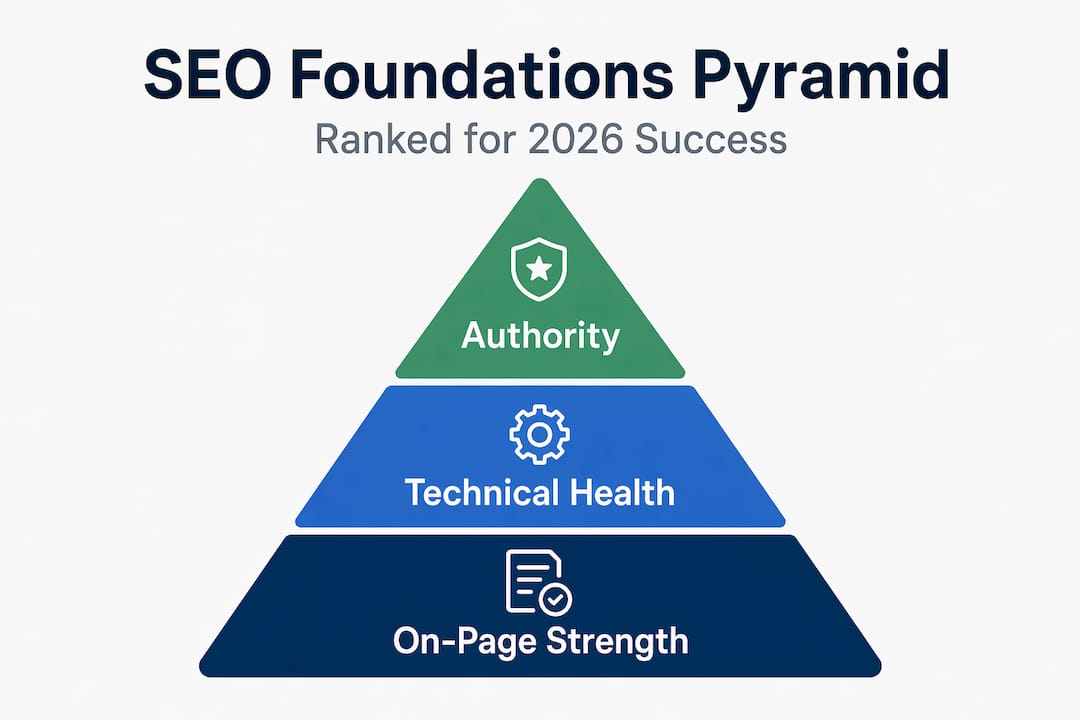
Tool comparison: core SEO functions
| Tool / Method | Best for | Key strength |
|---|---|---|
| Google Search Console | Performance monitoring | Free, shows actual query data and indexing issues |
| Specialized keyword tools | Research and gap analysis | Competitor keyword mapping and search volume data |
| Schema validators | Technical markup | Confirms rich result eligibility before publishing |
| Prompt research tools | AI search optimization | Identifies conversational query patterns for AI-first content |
Measurement and iteration practices
Ranking reports tell you where you stand. Google Search Console tells you why. Check impression-to-click ratios for your top pages monthly. A page with high impressions and low CTR needs a better title tag and meta description, not more content.
Key practices that separate advanced teams from beginners:
- Internal linking with intention. Every new piece of content should link to two or three existing pages, and receive links from existing content. This distributes authority across your site and helps search engines understand your content architecture.
- Link building focused on relevance. A backlink from a niche industry blog in your specific vertical is worth more than a generic high-domain-authority link from an unrelated site.
- AI-driven SEO combined with quality content and video delivers the best results for brands in 2026. Video content on your pages increases dwell time and creates additional opportunities for featured snippets.
- Google emphasizes people-first content over narrow keyword targeting. Build content libraries around themes and audiences, not individual search terms.
Pro Tip: Set up a monthly SEO audit cadence: check for crawl errors, review top 20 pages for freshness, and identify pages with declining impressions. Small corrections made regularly prevent large drops.
My take on chasing SEO trends vs. building a foundation
I’ve watched brands burn months chasing the newest SEO tactic, only to see their foundational pages erode because no one was tending to them. The pattern repeats constantly. A new AI feature drops, or Google announces a core update, and everyone scrambles to react. Most of those reactions are premature.
What I’ve learned is that the brands with the most stable organic growth are not the most aggressive trend adopters. They’re the most consistent fundamentals practitioners. They write good content. They fix technical issues before they compound. They earn real backlinks from real publications. And when AI-powered search features expand, those brands benefit automatically because they already hold the top organic positions.
The mistake I see most often is treating SEO as a campaign instead of an infrastructure. You don’t run an SEO campaign for six months and then stop. You build an SEO infrastructure that runs continuously and compounds over years. The tactics shift. The foundation doesn’t.
Where AI does genuinely change the game is in content research and intent mapping. Using prompt-based research to understand how people phrase questions to AI tools gives you a real edge in capturing conversational search traffic. That’s worth investing in. But it supplements your foundation. It doesn’t replace it.
Stay adaptable, stay consistent, and stop optimizing for the algorithm. Optimize for the person behind the search query. The algorithm will follow.
— Take
How Take-action helps brands grow with SEO and email
Building an SEO foundation takes time. Getting that traffic to convert and come back requires a second system entirely: email. At Take-action, we work with ecommerce brands to connect organic traffic growth with high-retention email programs that turn first-time visitors into loyal buyers. From welcome flows to post-purchase sequences, we build the automation layer that makes your SEO investment pay off long after the first click. If you’re ready to turn organic traffic into predictable revenue, explore what Take-action can do for your brand. You can also dig deeper into our perspective on SEO and ecommerce growth on the Take-action blog.
FAQ
What is the best SEO digital marketing strategy in 2026?
The best strategy combines technical SEO, E-E-A-T-driven content, and AI search optimization. Brands that rank consistently focus on user intent, schema markup, and quality backlinks rather than keyword volume alone.
How does AI search affect traditional SEO?
AI Overviews pull 84% of their citations from top 10 organic results, so strong traditional SEO directly feeds AI search visibility. Optimizing for organic rankings remains the foundation for appearing in AI-generated answers.
What are the most effective SEO tools for businesses?
Google Search Console is the starting point for any serious SEO program. Pair it with a keyword research platform for gap analysis and a schema validator to confirm rich result eligibility on your key pages.
How often should you publish content for SEO?
Consistent publishing improves both rankings and engagement over time. Quality and relevance matter more than frequency. One deeply researched post per week outperforms five thin posts covering the same surface-level topics.
Does email marketing support SEO growth?
Yes. Sending new content to your email list generates early traffic and engagement signals that search engines use to evaluate content quality. Email and SEO are complementary channels, not competing ones.